

Japan's Fishing Industry at a Crossroads: Two New Technologies for Next-Generation Aquaculture — A Hypothesis
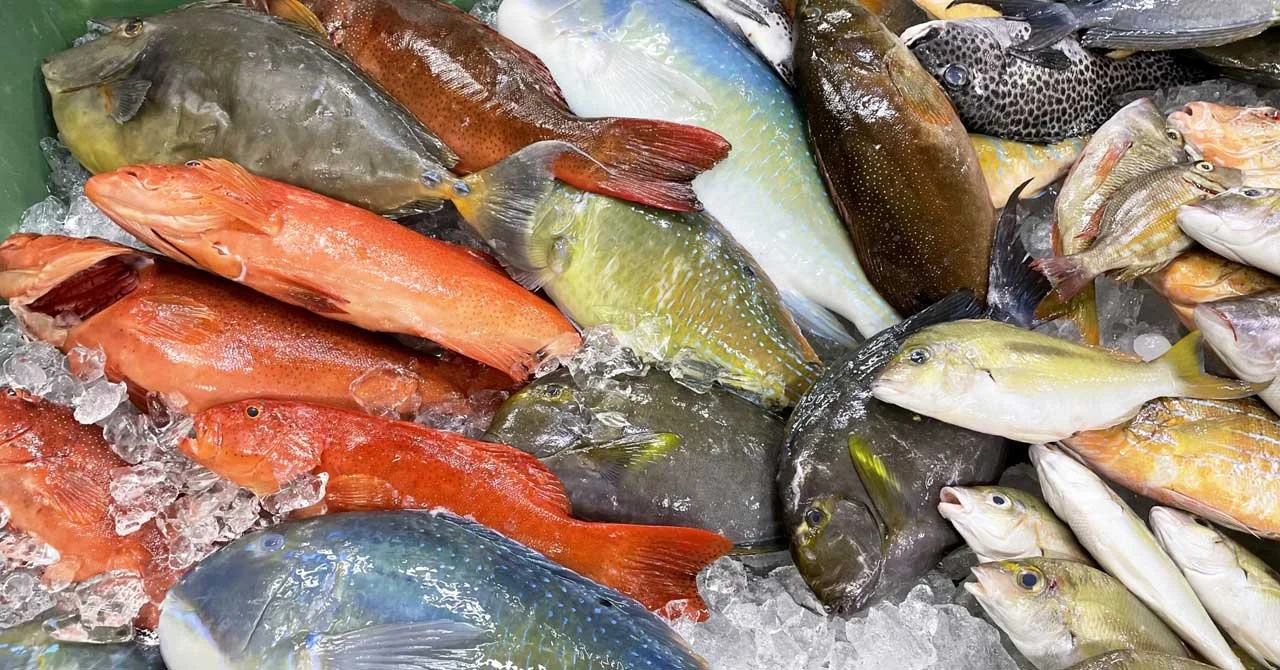
Surrounded by the sea on all sides, Japan's dinner tables were once filled with cheap, fresh, wild-caught fish as a matter of course. Today, however, Japan's fishing industry stands at a historic turning point.
Salmon catches in Hokkaido, for example, peaked at 231,480 tons in 2003 and have been declining ever since; the preliminary figure for 2025 was just 17,000 tons — only 7.3% of the peak (Source: Hokkaido "Hokkaido Fisheries Report"; Japan Fisheries Research and Education Agency). Pacific saury has fared similarly: Japan's 2025 catch quota was set at 95,623 tons, roughly 10% lower than the previous year and, for the first time since quotas began in 1997, below 100,000 tons (Source: Nikkei, April 21, 2025). Record-breaking poor catches like these have become routine news, laying bare the limits of "capture fisheries."
Globally, aquaculture production has already surpassed wild-catch fisheries. Japan, which has long relied on the bounty of wild fish stocks, now appears to be entering a phase where a genuine shift toward "farmed fisheries" is unavoidable.
Why the Shift to Aquaculture Is Now Urgent
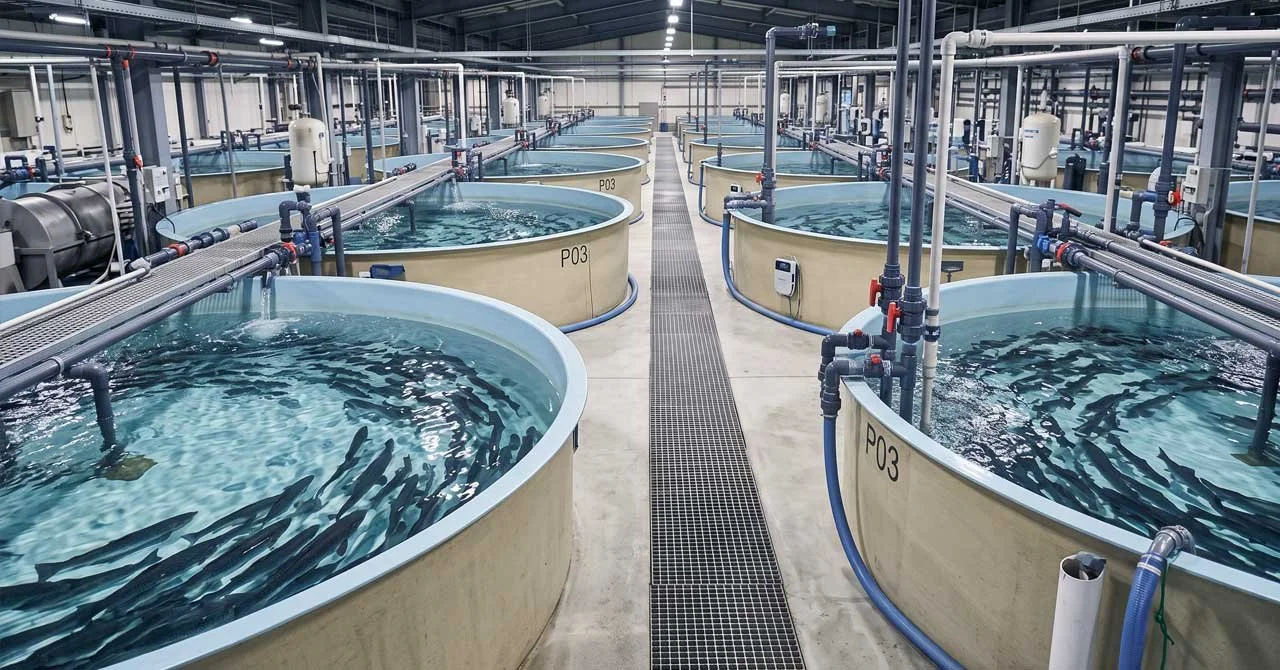
One reason advanced aquaculture (particularly land-based recirculating systems) never took off explosively in Japan is simple: wild fish could be caught cheaply at sea. That premise, however, is being eroded by several forces:
Changing ocean environments due to climate change: Rising sea temperatures and shifting currents mean that fish once reliably found in certain waters are increasingly absent, a pattern now reported across many regions.
Growing global demand: Rising demand for seafood, driven largely by emerging economies, has intensified international competition for marine resources. Fishmeal — the primary feed ingredient for farmed fish — is a case in point: driven by poor catches in Peru, the world's largest fishmeal producer, and rising demand from China, domestic fishmeal prices in Japan hit their highest level in roughly eight and a half years in June 2023, up 90% from the low seen in early 2020 (Source: Nikkei, June 13, 2023). Feed costs already account for more than 60% of total costs in fish farming, making this price volatility a direct threat to aquaculture businesses (Source: Japan Fisheries Agency, "Trends in Fisheries and Aquaculture Management").
Emerging geopolitical risk: Competition over marine resources — including foreign vessels operating near Japan's Exclusive Economic Zone (EEZ) — has also intensified.
Next-generation aquaculture that can supply fish stably, independent of weather and other external factors, is becoming increasingly important from the standpoint of Japan's food security.
Two Major Barriers: Water Quality and Feed
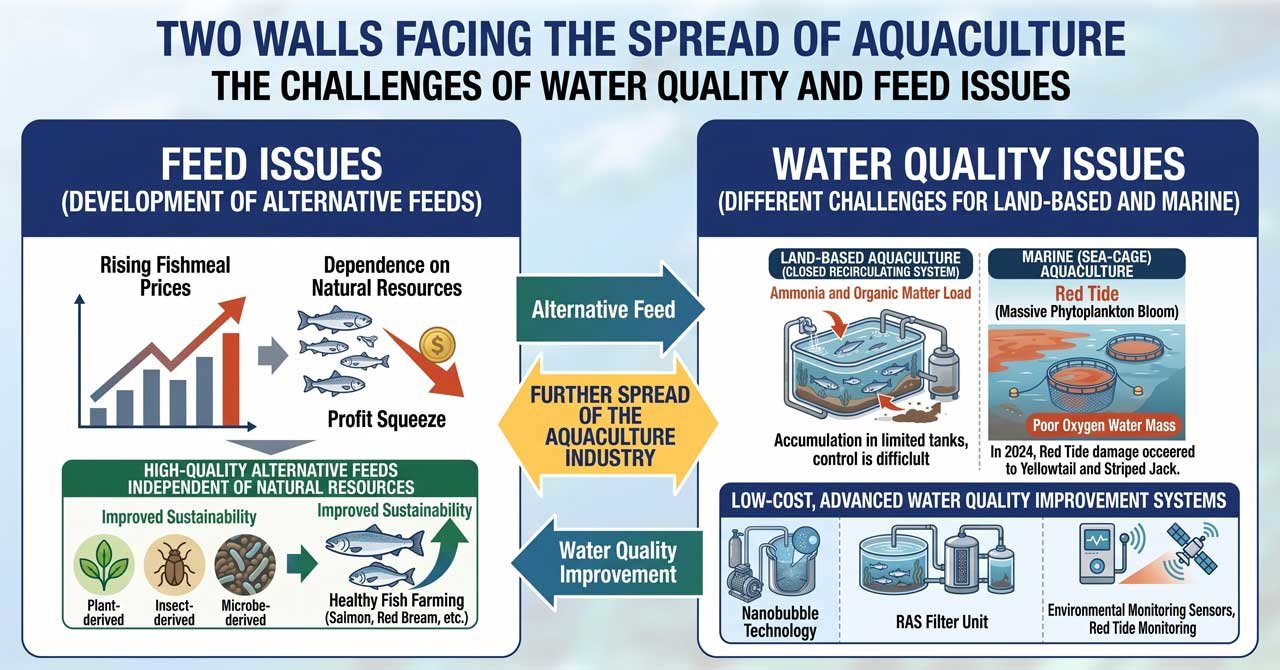
While expectations for aquaculture are rising, the industry faces two major barriers that must be overcome — and these apply to both land-based and sea-cage (net-pen) aquaculture alike.
The feed problem (rising fishmeal costs): As noted above, the rising price of fishmeal — the primary feed ingredient — is squeezing the profitability of aquaculture businesses. This is a shared challenge across both land-based and sea-cage farming.
The water quality problem: The nature of this problem, however, differs depending on the farming method.
Land-based (closed recirculating) aquaculture: Because water is continuously recirculated within a confined tank, pollution from uneaten feed and waste (ammonia and organic load) tends to accumulate inside the system and is difficult to control.
Sea-cage aquaculture: Because net pens are naturally flushed by seawater exchange, the kind of ammonia buildup seen in closed systems is less of a concern. Instead, sea-cage farms face broader, region-scale environmental risks: harmful algal blooms ("red tide," in which explosive plankton growth clogs fish gills or releases harmful substances) and hypoxic (low-oxygen) water masses caused by the decomposition of dead plankton in bottom layers, both of which can cause mass fish die-offs. In 2024, for instance, red tide damage affected yellowtail-family species such as amberjack and striped jack in the Yatsushiro Sea and Tachibana Bay (Source: Japan Fisheries Agency, "Continued Damage from Red Tide, FY2024").
Developing high-quality alternative feed that doesn't depend on wild-caught resources, together with building low-cost, advanced water quality management systems, appears to be a key condition for aquaculture to spread further.
A Hypothesis: Combining "Nanobubbles" with "BSF + Microalgae"
What follows is the author's own hypothesis and proposal in response to the challenges above — not an established solution backed by proven data, but an idea built from combining existing component technologies. Please read it in that light.
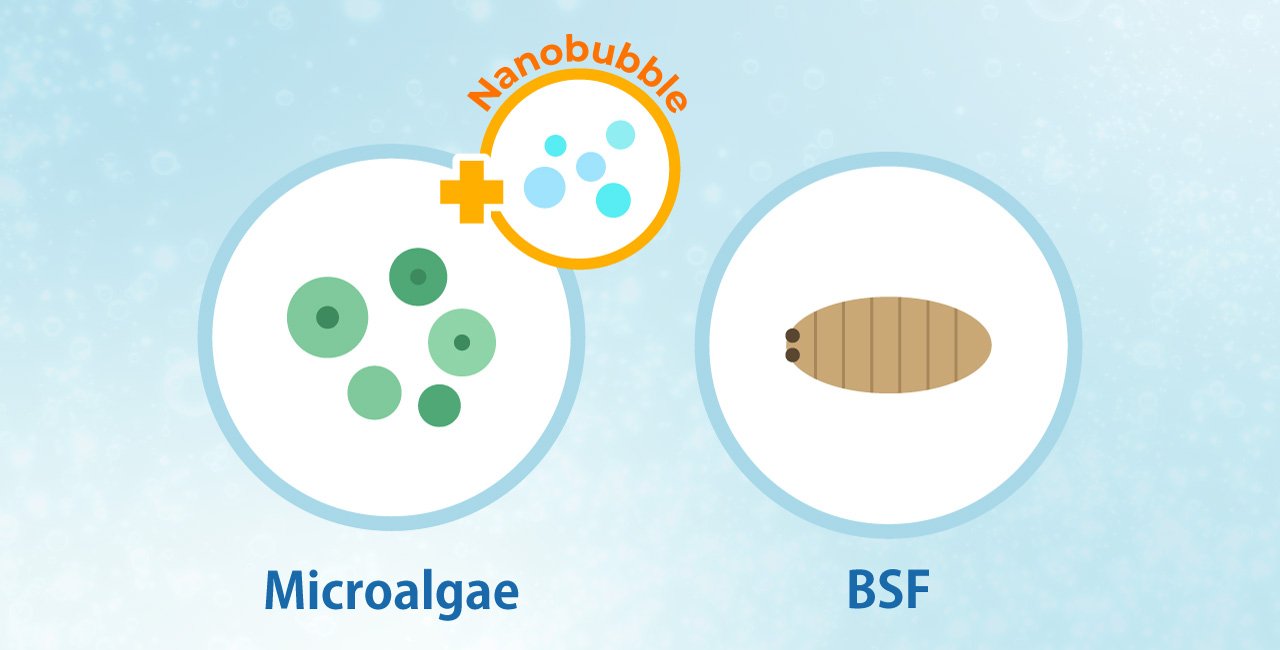
The focus here is on nanobubble technology combined with alternative feed made from Black Soldier Fly (BSF) larvae and microalgae.
Nanobubbles are extremely tiny bubbles, roughly a few hundred nanometers or less in diameter (a nanometer is one-billionth of a meter). Unlike ordinary bubbles, they don't rise quickly to the surface and can remain suspended in water for extended periods — a property being studied for applications such as improving dissolved oxygen supply and water purification.
BSF (Black Soldier Fly) larvae are gaining attention as feed: they grow quickly, can be raised on organic waste, and have a low environmental footprint, making them a strong candidate protein and lipid source to replace fishmeal. However, BSF lipids consist mainly of saturated fatty acids such as lauric acid, and contain almost none of the omega-3 polyunsaturated fatty acids — EPA (eicosapentaenoic acid) and DHA (docosahexaenoic acid) — that are essential for the growth and health of farmed fish. Wild fish obtain EPA and DHA because microalgae (such as Nannochloropsis) at the base of the food chain biosynthesize these compounds themselves. The core of this hypothesis, then, is that combining BSF with microalgae-derived components could produce feed that is nutritionally closer to complete.
Bringing nanobubble technology into this picture may offer additional synergies:
More efficient algae cultivation (potential benefit): Nanobubbles — particularly CO2 bubbles — may improve mass transfer and dissolution efficiency, potentially boosting the photosynthetic productivity of algae, which is currently a major cost barrier. That said, reported effects vary considerably depending on the algae species, the gas used (air, oxygen, or CO2), and the scale of cultivation, so the benefit could turn out to be limited under certain conditions — this needs careful verification.
Improved water quality (potential benefit): In land-based tanks, introducing nanobubbles may stabilize dissolved oxygen levels and enhance water purification, potentially reducing the risks associated with high-density farming. Notably, a similar approach has already been proposed for sea-cage farms: a Japan Fisheries Agency demonstration project examined combining an oxygen concentrator with a nanobubble generator to rescue yellowtail during red tide events. Because nanobubbles roughly 100 nm in diameter theoretically remain suspended in water for months, the study found this approach could supply oxygen at the scale of a sea-cage net — something oxygen cylinders alone are not practical for — at relatively low cost (Source: Japan Fisheries Agency, "Proposal and Cost-Effectiveness Assessment of a High-Concentration Oxygen Device for Rescuing Yellowtail During Red Tide Events"). In other words, nanobubble technology is already moving toward practical validation not only for closed land-based tanks, but also as a response to water-quality (oxygen) risk in sea-cage aquaculture.
Six Hurdles to Clear Before Practical Implementation
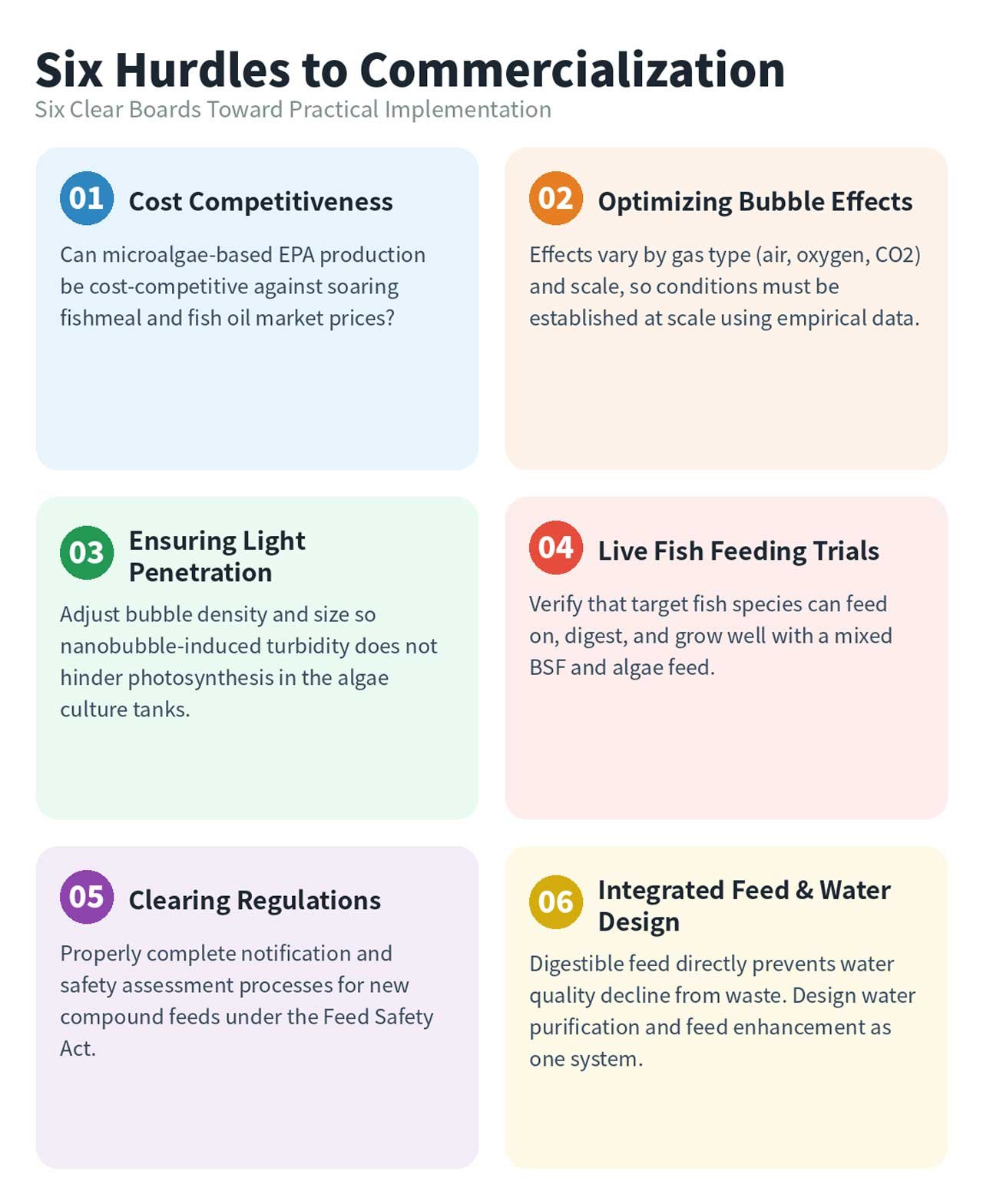
The individual technological components here — nanobubbles, BSF farming, microalgae cultivation, EPA extraction and concentration — already exist; this is not science fiction. But turning this into a viable business will require verifying the following points step by step:
Cost competitiveness: Can microalgae-based EPA production, which tends to be costly, achieve economic parity with the rising market price of fishmeal and fish oil?
Optimizing bubble effects: Because effects vary with gas type (air/oxygen/CO2) and scale, conditions for effective scale-up need to be established based on real data.
Maintaining light penetration: Cloudiness caused by nanobubbles must not impede photosynthesis inside algae cultivation tanks, so bubble density and size need careful tuning.
Feeding trials with live fish: It must be demonstrated that target fish species will actually eat, digest, and grow on a feed mixing BSF and algae without issue.
Regulatory clearance: Any new compound feed must go through the notification and safety assessment process required under Japan's Feed Safety Act.
Integrated design of feed and water quality: Feed that is easier to digest directly reduces water quality degradation from waste, so water purification and feed enhancement should ideally be designed as one integrated system.
Starting Small
Despite these multiple technical hurdles, the most realistic and reliable path forward is to start with small-scale pilot trials — comparing algae cultivation productivity with and without nanobubbles, and running small-scale feeding trials with BSF-and-algae blended feed — and build up data steadily from there.
Through this kind of patient, incremental verification, a path may emerge toward raising high-quality fish domestically using homegrown technology, freeing Japan from its dependence on climate and wild fish stocks. Combining component technologies that Japan already possesses — microalgae cultivation, insect-based feed, and nanobubbles — could, in time, become one option for updating Japan's fishing industry for the future.
At CWM, we have our own proprietary nanobubble generation technology called Nano-Inset. Because Nano-Inset scales well both up and down, it is ideally suited as the underlying technology for realizing solutions like the one introduced here. We believe that by harnessing the power of nanobubbles, we have the potential to protect both the environment and the lives of each of us who depend on it. If you're interested in this innovation, please don't hesitate to contact us.
This article presents the author's own hypothesis and proposal. It does not guarantee the effectiveness of the combination of technologies described. Practical implementation would require verification through testing at each stage.
