

Next-Generation Sterilization: The "Zero-Residue Revolution" of Ozone Nanobubbles in Healthcare
1. Introduction: Challenges in Healthcare and the Potential of Ozone
In recent years, the medical and dental fields have seen a rapidly increasing demand for safe sterilization and cleaning technologies that do not carry the risk of developing drug-resistant bacteria.
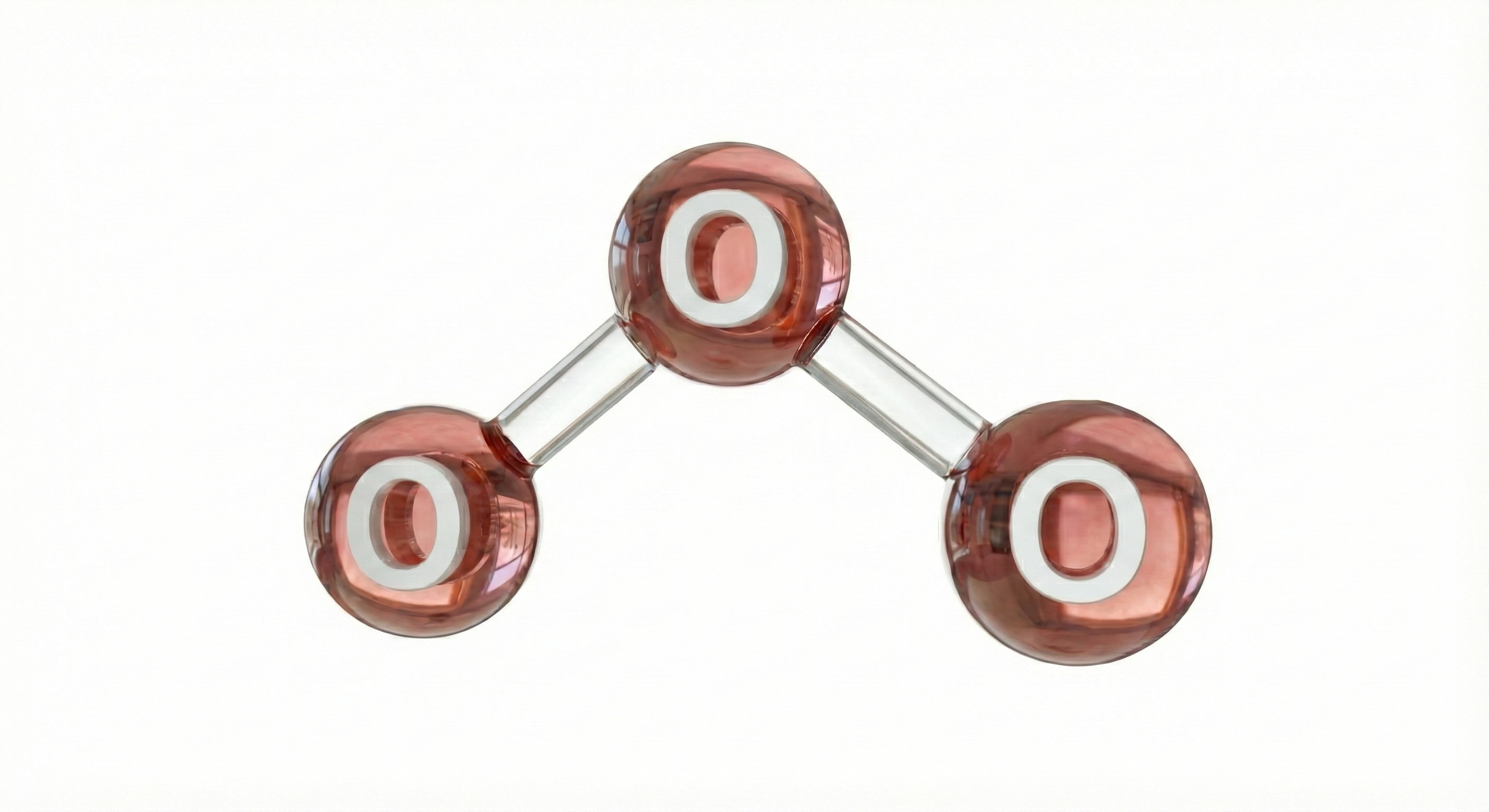
"Ozone (O3)" has long been the focus of attention as a solution to this challenge.
Ozone possesses a powerful oxidizing capacity second only to fluorine.
Its ideal characteristic is that it leaves no residual toxicity, as it reverts to oxygen (O2) after reacting.
However, conventional ozone water faced physicochemical hurdles, such as low storage stability (reverting to oxygen too quickly) and poor dissolution efficiency in water.
A breakthrough for these challenges has arrived in the form of Japanese "Nanobubble" (Ultrafine Bubble) technology.
2. Mechanism: Why "Nanobubble" Technology is Essential
Typical bubbles (milli-bubbles) rapidly rise to the surface due to buoyancy and burst.
In contrast, nanobubbles—with a diameter of less than 1μm—are virtually unaffected by buoyancy.
Instead, they remain suspended in water for extended periods (on the scale of months) due to Brownian motion.
Nanobubbling ozone provides two decisive advantages:
Maximization of Gas-Liquid Interface: By miniaturizing the bubbles, the contact surface area with water increases explosively, dramatically improving ozone dissolution efficiency.
Action via Zeta Potential: The surface of a nanobubble is negatively charged, naturally attracting many bacteria and viruses (which often possess positively charged or hydrophobic surfaces). This allows ozone to act efficiently on the intended targets.
3. Sterilization Mechanism: Direct Attack on Bacterial Cells
The sterilization mechanism of ozone nanobubbles is not metabolic inhibition (like antibiotics) but rather physicochemical destruction via oxidative power.
Cell Wall Destruction: Ozone molecules and hydroxyl radicals (•OH) generated in the water act on the double bonds of the bacterial cell wall (cell membrane), decomposing them through oxidation.
Bacteriolysis: As the cell wall is destroyed, internal components leak out (lysis), leading to the death of the bacterium.
Because this process occurs in an extremely short timeframe, it leaves no room for bacteria to develop resistance.
This is the primary reason why ozone nanobubbles are highly anticipated as a countermeasure against multidrug-resistant bacteria, such as MRSA.
4. Specific Applications in Medical and Dental Fields
The following are the primary areas where practical application or research is currently advancing:
① Dentistry (Periodontal and Root Canal Treatment)
Deep periodontal pockets are hotbeds for anaerobic bacteria and are notoriously difficult for conventional drugs to reach. Microscopic ozone nanobubble water penetrates deep into narrow pockets and the complex structures of root canals.
The dual effect of physical cleaning and ozone’s bactericidal power neutralizes the causative bacteria.
② Dermatology and Surgery (Wound Cleansing)
In the cleaning of pressure ulcers (bedsores) and diabetic ulcers, this technology provides infection control while minimizing tissue irritation.
Furthermore, reports suggest that the oxygen supply from the ozone stimulates cellular metabolism, promoting wound healing.
③ Medical Equipment Cleaning and Sterilization
For heat-sensitive precision instruments such as endoscopes, this technology is being introduced as an eco-friendly cleaning method.
It serves as an alternative or supplement to harsh chemicals (like glutaraldehyde), thereby reducing health risks for healthcare workers.
5. Conclusion: Toward a Sustainable Medical Environment
Ozone nanobubble technology is more than just "powerful sterilized water."
It is a sustainable medical technology that reduces chemical usage, lowers environmental impact, and provides a safe treatment environment for both patients and healthcare professionals.
Born from water and oxygen, and returning to water and oxygen, this technology holds the potential to become the future standard for medical hygiene management.
