

Realizing the future of Japan’s dam reservoirs envisioned by Kotaro Takemura through Nanobubble Technology. The Ultimate Challenge of Global Standard "MRV" and Baseline Scenario Construction
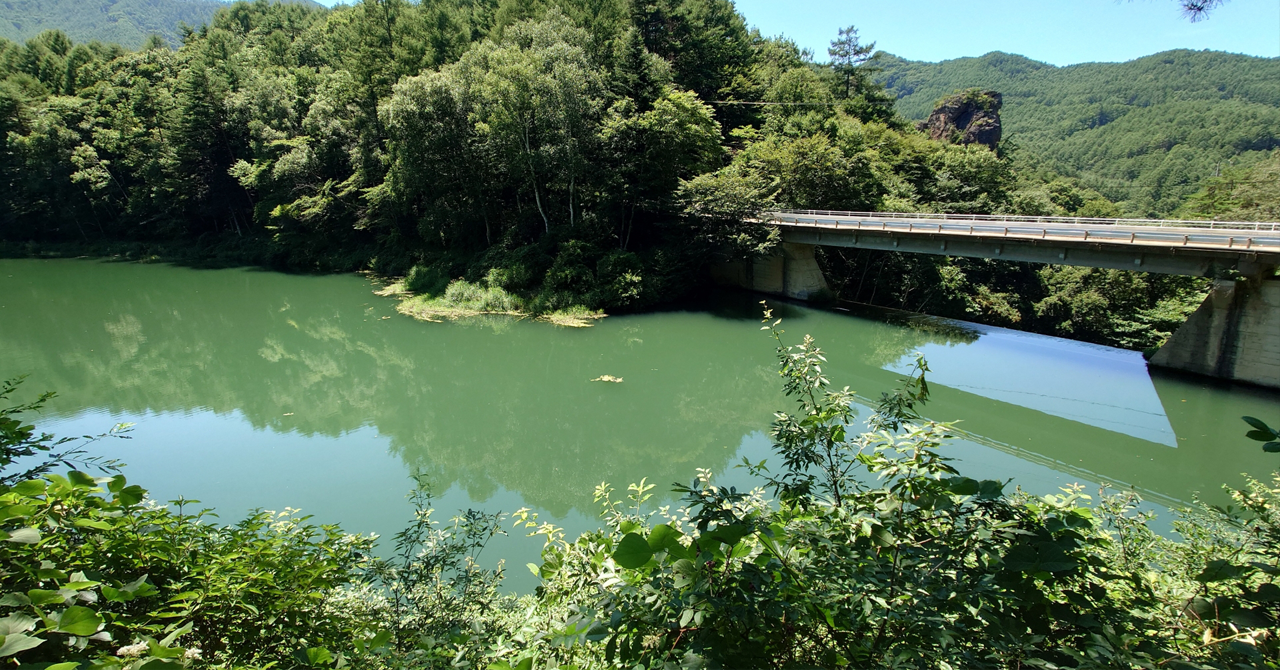
The Foundations of Civilization: Awakening the Hidden Potential of Japan’s Dams
Kotaro Takemura, former Director-General of the River Bureau at the Ministry of Construction (now the Ministry of Land, Infrastructure, Transport and Tourism), is a renowned author who has published numerous influential works.
His book, Hydropower Will Save Japan: Increasing Electricity Value by Over 2 Trillion Yen with Existing Dams, serves as a powerful reminder of Japan’s rich topography and the fact that "water" is the true lifeblood of the nation.Today, we are focused on updating Takemura’s vision with modern technology.
Specifically, our project aims to maximize the untapped potential of hydroelectric dams.
In his work, Takemura highlights the existence of "unutilized assets."
Despite the vast number of dam reservoirs across Japan, the immense potential energy (gravity-based energy) they hold remains largely untapped for power generation.
He asserts that by implementing strategies to harness this potential, Japan could generate an extraordinary amount of electricity. This approach is far from unrealistic. Even in dams already completed, power generation facilities can be retrofitted using the latest technology.
Takemura argues that the primary obstacle is not technical, but rather the "administrative silos" of the government. By correcting these bureaucratic barriers and optimizing existing infrastructure, Japan’s energy landscape can be transformed dramatically.
A Use for "Nighttime Surplus Electricity" Hidden in Plain Sight
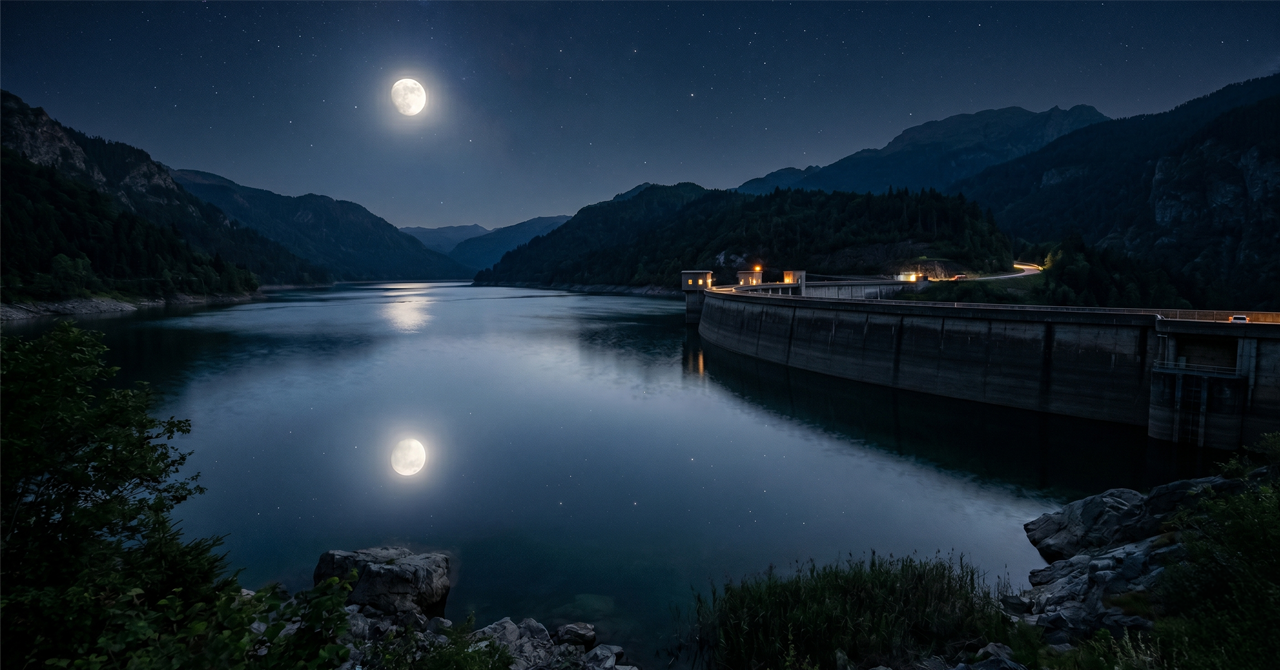
The lack of progress in improving dam reservoir environments was not due to a lack of will, but rather the absence of effective technology and a viable strategic framework.
We are proposing a breakthrough vision to tackle this challenge using Nano-Inset, an ultra-high-density nanobubble technology. Because it operates on minimal power, it is uniquely scalable to vast volumes of water.
Hydroelectric dams generate electricity 24 hours a day (excluding pumped-storage types), which inevitably results in "surplus power" during the night when demand drops. Our vision is to utilize this virtually zero-cost energy to generate nanobubbles and infuse dam reservoirs with massive amounts of pure oxygen.
Until now, deploying nanobubble technology on a large-scale dam was considered impossible. However, by combining our Nano-Inset technology with the infrastructure strategies envisioned by Mr. Kotaro Takemura, this ambition becomes a reality.
Why Is "Dam Lake Purification" Necessary?
While dams are vital infrastructure supporting Japan’s energy and flood control, they also face significant environmental challenges.
Hidden Sources of Greenhouse Gases
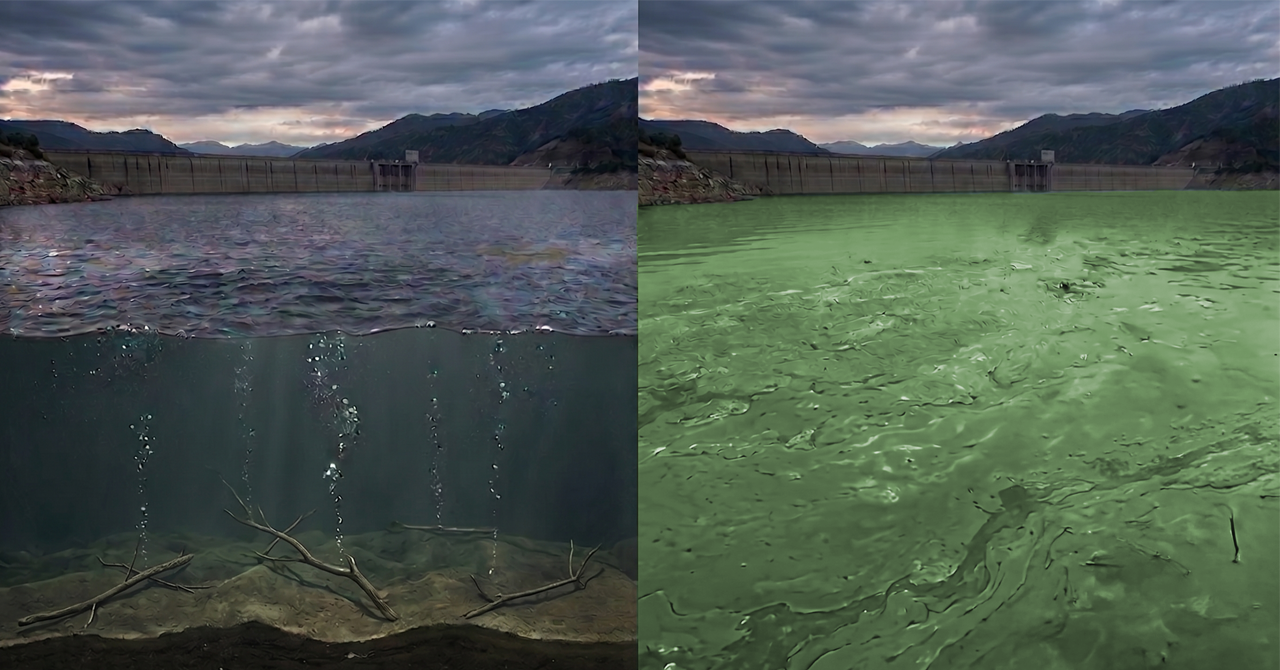
When organic matter accumulated at the bottom of a dam lake decomposes under anaerobic (oxygen-free) conditions, it releases methane gas, which has a global warming potential more than 25 times that of CO2.Methane emissions from dams worldwide have reached a scale that can no longer be ignored.Water Quality Degradation and Ecological Impact
Stagnant water leads to blue-green algae blooms, foul odors, and severe hypoxia during summer.This negatively impacts not only the local ecosystem but also the river environment downstream.Our goal is to resolve these issues and transform dams from "legacies of the past" into hubs for "Nature Positive" restoration.
Contributing to Agricultural Decarbonization and Beyond
The benefits of this project extend far beyond the confines of the dam reservoir.
A key area of our focus is the ripple effect on climate change mitigation within the agricultural sector.
As previously discussed in this blog, rice paddies are a major source of methane—a potent greenhouse gas. Supplying "water with high dissolved oxygen levels" is an extremely effective solution to this challenge.
By using nanobubbles to oxygenate water within irrigation dams, we can deliver high-oxygen water through existing canals directly to farmlands. This improves the anaerobic conditions of the soil, fundamentally suppressing methane emissions at their source.
In essence, updating dams to serve as "massive oxygen supply hubs" is a new infrastructure strategy. It not only protects the aquatic environment of the entire watershed but also provides a powerful catalyst for the decarbonization of Japanese agriculture.
The "Measurement Wall" Blocking Baseline Scenario Construction
To implement this project in society, we must overcome a formidable "Measurement Wall."
To prove the effectiveness of our intervention, we must construct a "Baseline Scenario" (a projection of the past, present, and future if no action were taken) with extremely high precision.
This requires the following sophisticated measurements:
Capturing Ebullition (Bubble Release)
Methane from lakes is released in sudden, large-scale "bubbles" from the bottom sediment. Simple data that fails to capture this ebullition is not recognized as a valid baseline. Precise flux measurement using methods like the "floating chamber" is required.Supporting Sediment Data
We must simultaneously obtain scientific evidence for the methane generation mechanism, including TOC, ORP, and dissolved oxygen profiles.Covering Seasonal Variations Through Continuous Monitoring
Since methane production is heavily influenced by water temperature, accumulating data for at least one full year is essential to draw a reliable baseline scenario.
From "Defensive" Measurement to "Offensive" Rule-Making
Our challenge in overcoming these difficult measurements is not merely for situational awareness. It is to integrate our efforts into the global MRV (Measurement, Reporting, and Verification) framework and transform environmental improvement into value through "Rule-Making" for carbon credits.
1. Establishing the Baseline Scenario
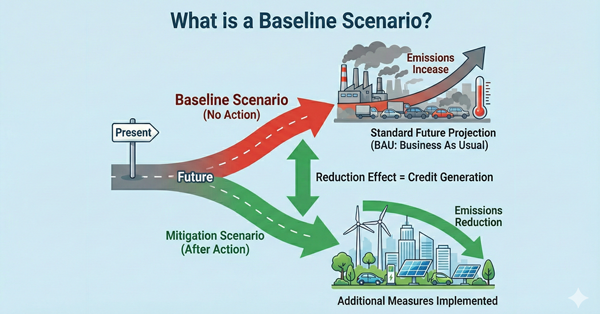
Based on historical and current data, this scenario statistically predicts how much methane would continue to be emitted in the future if no countermeasures were taken.This serves as the benchmark (baseline) for all reduction amounts.
2. Predictive Scenario via Intervention
We define the specific human-led intervention (action) to be taken on the target lake and predict how much it will lower emissions compared to the baseline.In credit auditing, we first check if our technology fits into the existing "Intervention Library" (a database of registered methodologies).If it does not exist, we must start by registering the methodology itself as a world-first intervention.
We are shifting from "defensive" measurement to "offensive" rule-making on a global stage. This is our core strategy.
Support for "Rule-Making" as a Public Interest Project

Establishing a world-class MRV framework and a precise baseline scenario for a new intervention is no small feat. It requires deep collaboration with academia, high-end analytical tools, and years of rigorous fieldwork.
The initial costs and resources required are staggering. For a single private enterprise, the burden of "global rule-making"—the process of certifying a new environmental intervention—is nearly impossible to carry alone.
Our goal is to leverage social overhead capital to protect our water environments while fighting climate change. Because this mission is inherently for the public good, we urgently need municipal and national support. This includes funding for research and active institutional backup for our pilot programs to ensure we can establish a definitive, Japan-originated MRV methodology.
Dams were the icons of Japan's Showa-era growth. By converting them into smart hydroelectric hubs and integrating our Nano-Inset technology, we are beginning the journey to redefine them as the ultimate decarbonization and restoration infrastructure for the Reiwa era.
Call for Business Partners
CWM is currently seeking business partners to bring about significant social change using "Nano-Inset" technology.If you are interested not just in the profit from hardware sales, but in contributing to the global environment and creating new value through carbon credits, please feel free to contact us.
References & Further Reading
Book by Kotaro Takemura:Hydropower Will Save Japan: Increasing Electricity Value by Over 2 Trillion Yen with Existing DamsView on Amazon
