

Water and Geopolitics: The Fate of "Blue Gold" Defining National Survival and Failure
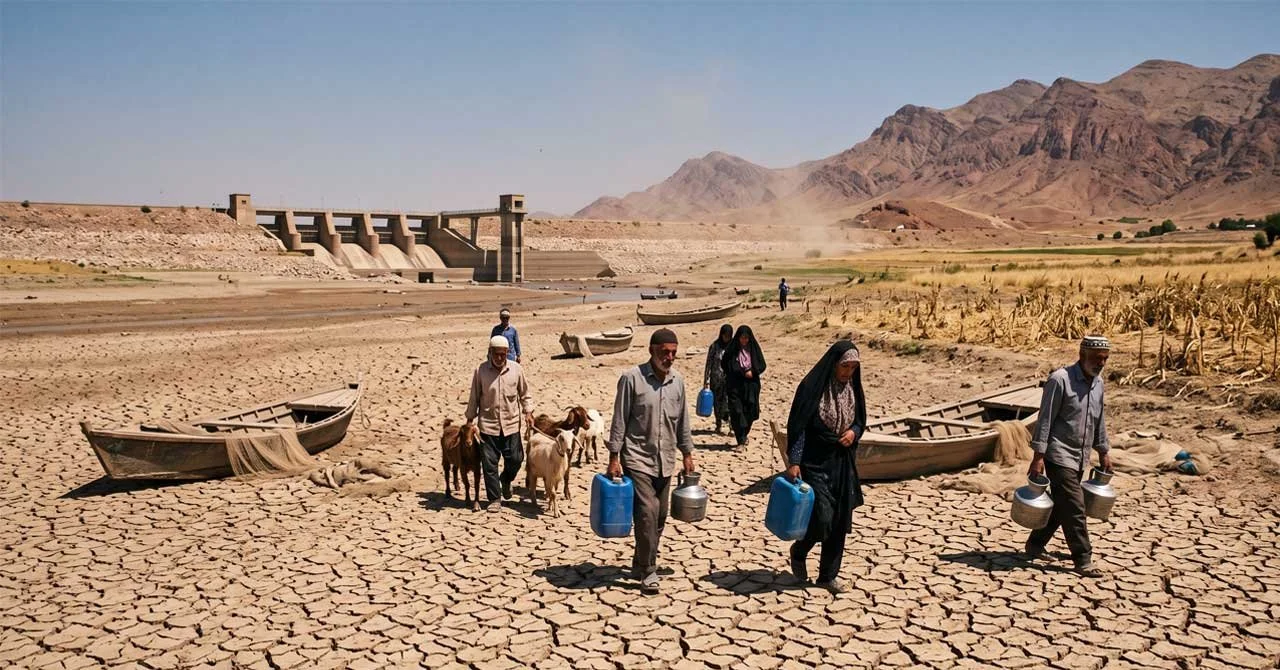
The Geopolitical Threat of "Water Bankruptcy" Beyond Environmental Issues
In 21st-century international relations, the most severe yet underestimated threat to security is the struggle for control over water and its unsustainable depletion.
When water demand chronically exceeds the sustainable supply of hydrological systems, leading to a practically "irreversible" collapse of environmental and social systems within human timescales, researchers refer to this state as "Water Bankruptcy."
If "black gold" (oil) was once the protagonist of geopolitics, the coming era will see "blue gold" (water) emerge as the decisive element shaping the rise and fall of nations, the sustainability of regimes, and regional order. This article traces the history of water conflicts and examines a case study of water environmental collapse in modern Iran.
In doing so, it highlights the mechanisms of "four specific geopolitical and security crises" triggered by water bankruptcy, and discusses how nations must adapt to this existential threat.
Hydro-Politics Bridging History and the Present
1. History Proves "Water" is a Catalyst for Conflict
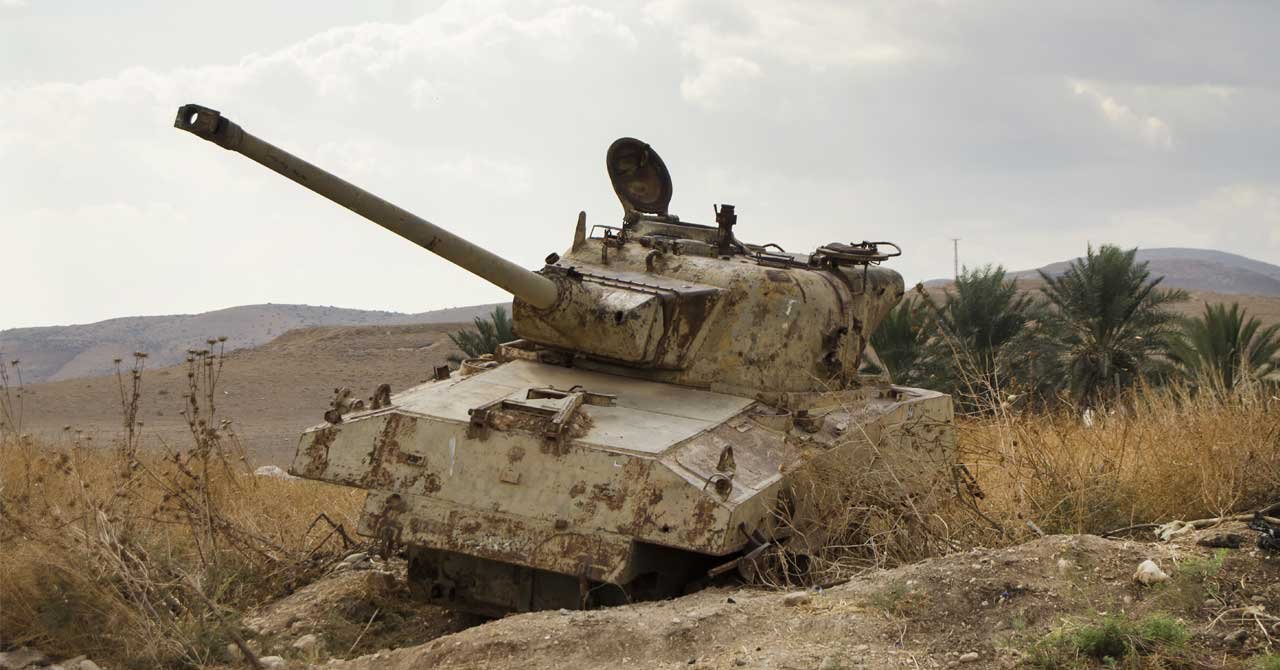
The history of water acting as a trigger for interstate tension and armed conflict dates back to the very dawn of human civilization.
The earliest well-documented interstate war in history occurred around 2500 BCE in ancient Mesopotamia (present-day southern Iraq) between the Sumerian city-states of Lagash and Umma. This border conflict over the fertile agricultural land of "Gu'edena" (the "edge of paradise") and the control of irrigation canals, which involved excessive damming and water diversion, persisted intermittently for a century.
In modern times as well, water has served as a decisive trigger or weapon in geopolitical clashes. The most prominent example is the Six-Day War of 1967 (Third Arab-Israeli War). One of the direct catalysts for the outbreak of this war was a fierce struggle over water resources (hydro-politics)—specifically, Arab plans to divert the headwaters of the Jordan River to cut off Israel's water supply, and Israel's subsequent military sabotage and countermeasures.
Even today, conflict risks in transboundary basins (international river basins) remain active flashpoints of the 21st century. Examples include the tension between Ethiopia, which is building a massive dam (the Grand Ethiopian Renaissance Dam) on the upper Nile to control downstream flows, and Egypt, which views this as an existential threat to its national survival.
2. Deep Dive: "Four Geopolitical Crises" Triggered by Water Bankruptcy
The catastrophic water environmental collapse facing modern Iran transcends a mere domestic environmental issue. It is manifesting as four multifaceted geopolitical crises directly linked to global security.
① A Security Early-Warning Signal for "Regime Collapse"
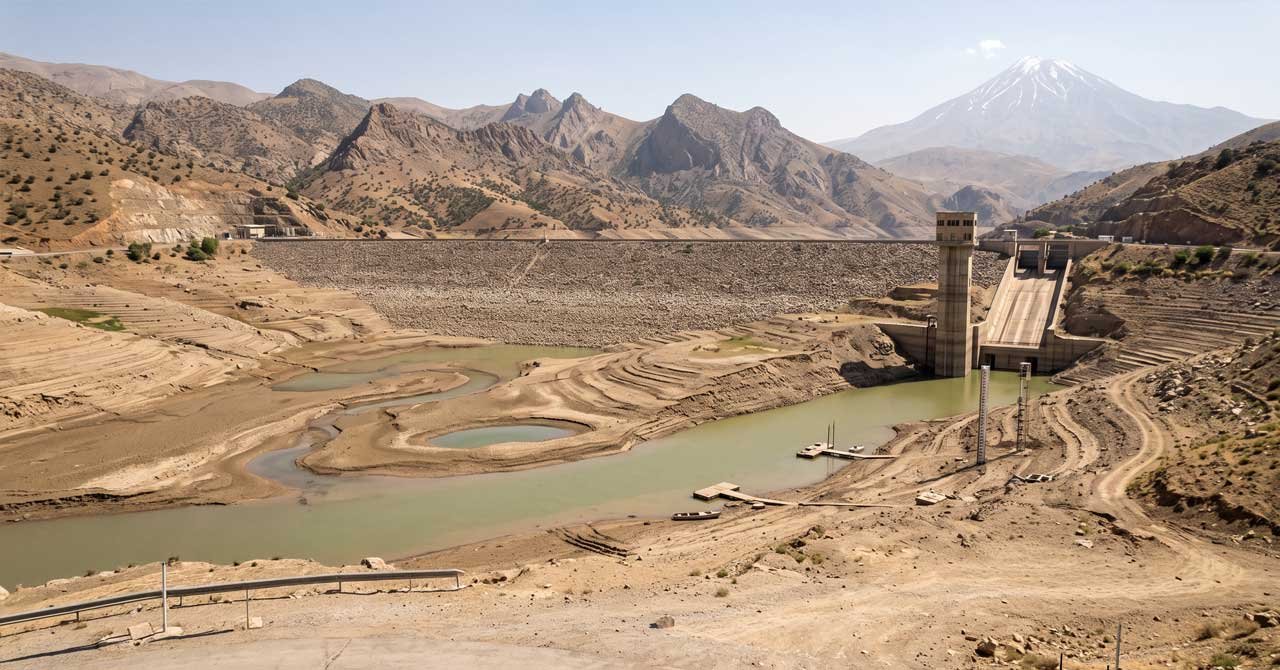
Water bankruptcy paralyzes the infrastructure directly linked to citizens' survival, serving as a decisive "accelerator of dissatisfaction" that ignites explosive anger toward the state.
While four of the five major dams supplying water to Iran's capital, Tehran, have dried up—dropping the overall dam water storage rate to about 33%—the reliance on groundwater for 60% of water consumption has resulted in continuous over-extraction at a deficit pace of 5 billion cubic meters (5 bcm) per year.
Consequently, catastrophic land subsidence exceeding 10 cm annually continues to occur in 18 provinces nationwide. In central Tehran, the rate of land subsidence has surged threefold in recent years.
Such physical collapse strips citizens of the daily normalcy of "water coming out of the tap," forcing them to face a daily "loss of dignity (humiliation)" as they must rely on water trucks.
When this situation compounded with multiple other crises—such as air pollution, rolling blackouts, and a currency crash—fierce nationwide protests erupted from late 2025 to January 2026.
The regime was backed into a corner, responding with brutal armed suppression (described by some accounts as one of the worst modern tragedies, with over 30,000 citizens allegedly killed).
In the international community, water bankruptcy is viewed not merely as an environmental problem, but rather as an "early warning signal for national security" that predicts domestic uprisings and regime collapse.
② Transboundary Resources and the Risk of "Interstate Conflict"
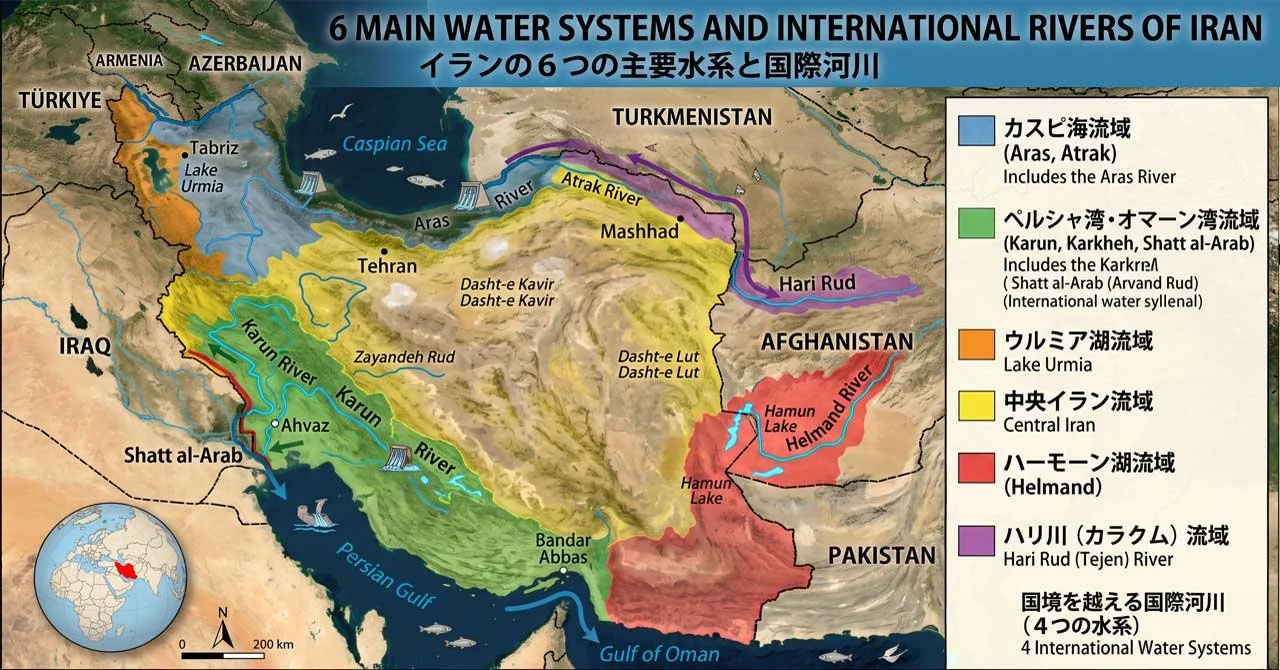
Hydrological cycles do not respect administrative boundaries or national borders. Four of Iran's six major river basins are transboundary international rivers.
In the face of domestic water bankruptcy, the current regime's aggressive "inter-basin water transfer projects (such as the Garm-Siri Project)," driven by a desire to divert domestic discontent and secure lucrative development concessions, have severely reduced water flows into neighboring Iraq.
This significantly increases the risk of triggering new transboundary political and military conflicts. Furthermore, in shared water bodies like the Caspian Sea, Persian Gulf, and Gulf of Oman, regional cooperation through a "joint water consortium" is crucial to mitigate the environmental impact of desalination (such as the discharge of hypersaline brine) among Gulf nations like Saudi Arabia, the UAE, and Bahrain.
However, the current regime's rigid "ideology-first foreign policy" paralyzes such dialogue and severely hinders sustainable regional cooperation.
③ The Existential Geopolitical Paradox of Relying on an "Adversary"
Water bankruptcy forces nations into an ultimate trade-off between "political ideology" and "physical survival."
Israel, which overcame chronic water scarcity to establish a world-leading "closed-loop system" (with advanced infrastructure like the Shafdan plant, recycling approximately 90% of its wastewater to meet about 60% of agricultural irrigation needs), possesses the world’s most advanced solutions—such as drip irrigation, high-efficiency wastewater treatment, and AI-powered leak detection—capable of technically addressing Iran’s water bankruptcy.
Introducing precision drip irrigation to just 50% of Iran's agricultural land could save 20 to 30 billion cubic meters of water annually, completely wiping out its groundwater deficit.
Similarly, recovering leaked drinking water (which accounts for roughly 30% of lost supply due to aging pipes in Tehran) through AI-powered leak detection could preserve 200 million cubic meters annually.
Yet, the Iranian regime designates Israel as its primary adversary and maintains no diplomatic relations.
Caught in this geopolitical paradox of needing an "enemy's" technology for survival while being politically forced to reject it, Iran is squeezed into seeking pragmatic, indirect channels.
These include working through "international intermediaries" like UN agencies and multilateral development banks, or procuring equipment from third-party suppliers that license Israeli patented technologies.
④ The Paradox of Sanctions Relief Fueling "Opaque Interest Groups"
A geopolitical paradox exists where international sanctions relief or the injection of foreign capital into the system can, ironically, worsen water bankruptcy.
Iran's water resource development is said to be deeply dependent on an entrenched structure of vested interests (collectively referred to locally as the "water mafia") led by giant general contractors under powerful power sectors and opaque bureaucratic networks.
They systematically bypass or trivialize independent environmental impact assessments (EIAs), prioritizing the acquisition of infrastructure development budgets to push forward unnecessary mega-dams and inter-basin water transfer projects that devastate ecosystems.
When funds flow into the state treasury through nuclear negotiations or sanctions relief, without strict conditions for transparency and environmental protection, these abundant foreign reserves are immediately monopolized by these interest networks.
The funds are channeled into even more "destructive, large-scale infrastructure projects."
In other words, there is a structural flaw where international sanctions relief can, ironically, accelerate the rate of environmental destruction and water bankruptcy.
A Roadmap to Establish Water Security
Water is the source of all life. It is the most vital, irreplaceable resource supporting the very foundation of human survival—from the daily lives of citizens, food supply, and industrial activities, to national stability, security, and world peace.
The depletion or collapse of water resources is fundamentally different from that of financial or mineral resources; once lost, it literally reduces societal sustainability to zero.
Without recognizing that water is extremely vital, it is impossible to discuss economic development or social stability.
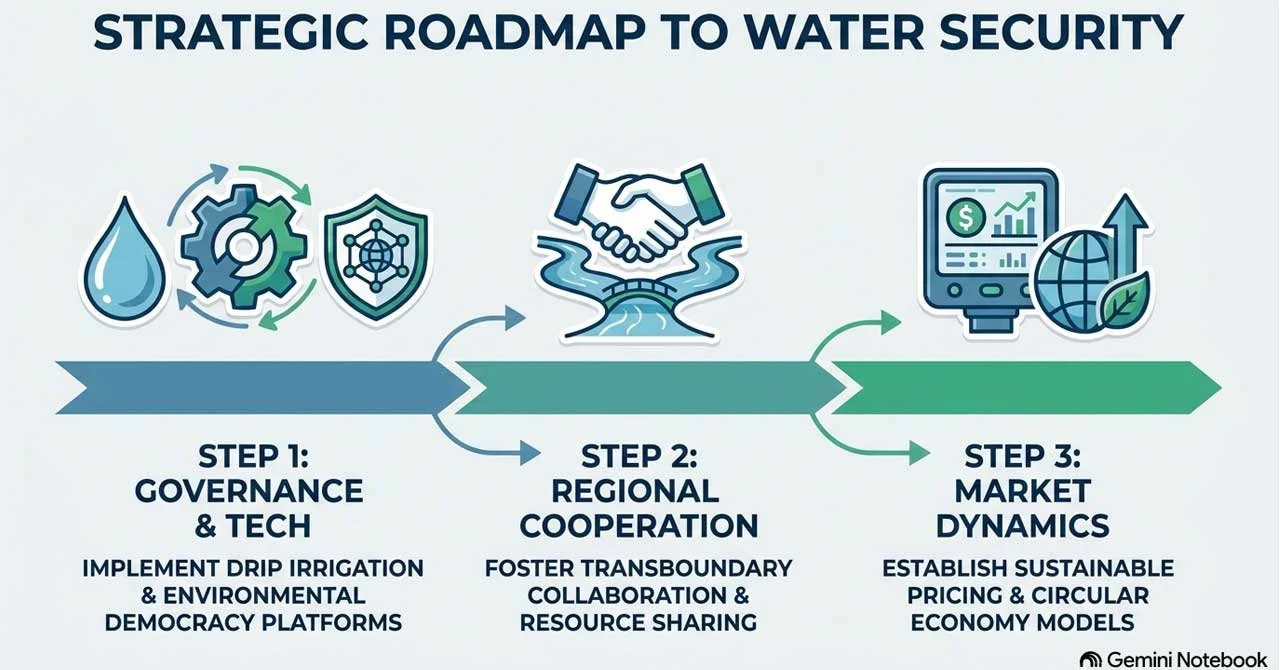
To avert or adapt to the severe geopolitical crisis of water bankruptcy surrounding this "most precious and sacred resource," the path forward for nations, corporations, and the international community is clear:
A Packaged Reform of "Technology" and "Governance": No matter how advanced the technologies introduced (such as drip irrigation or wastewater reclamation plants) may be, they are useless if the governing structures managing them are corrupt. It is essential to dismantle the "water mafia," establish transparent environmental impact assessments, and transition decision-making from central command to "basin-scale, democratic, decentralized management (environmental democracy)."
Non-Ideological Regional and International Cooperation: Water resources circulate regardless of administrative boundaries or national borders. Geopolitical rivalries must be temporarily set aside to establish and maintain "joint water consortia" and regional dialogue agreements to manage shared water resources.
Introduction of Market Mechanisms and Awareness Reform: Governments must reform water pricing by revising excessive subsidies, allowing citizens and businesses to re-evaluate the economic value of water and encouraging water-use efficiency through market-based models.
Water bankruptcy is not a distant prediction; it is an active geopolitical nightmare currently threatening the very survival of nations.
We must deeply engrave in our minds how precious water is to life, nations, and the entire planet. We believe we must redefine water not as an inorganic substance flowing from a tap, but as the most critical "security and survival infrastructure" safeguarding peace and stability in the 21st century, and embark on a fundamental transformation of environmental governance.
