

Water and Geopolitics (1)The "Silent Crisis" Facing the Mekong, the River of Life: 5 Shocking Truths We Must Know
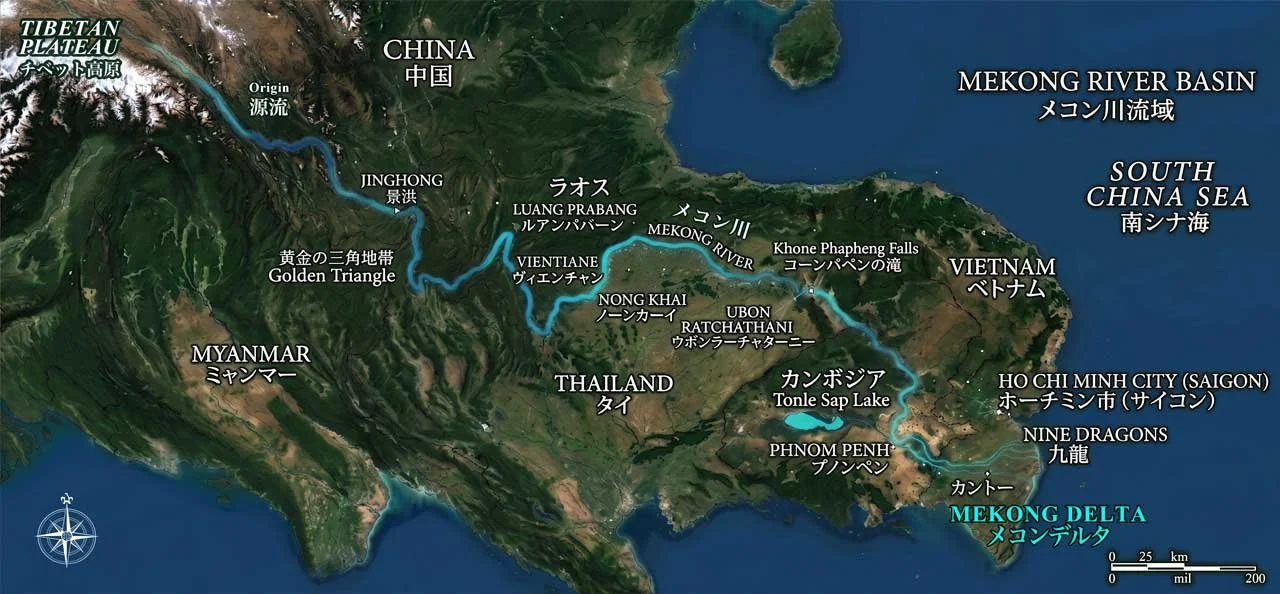
Running through Southeast Asia, the "Mother River" Mekong connects the lives of approximately 70 million people. Currently, a severe situation is unfolding in this great river that fundamentally threatens the food security of the basin
We must sound a strong alarm now that the Mekong is suffering "a thousand cuts leading to death".
Today, what is accelerating the Mekong's crisis is the "butterfly effect" brought about by geopolitical risks in the distant Middle East. Soaring energy prices due to tensions in the Strait of Hormuz are driving the region's energy demand toward dams, eroding the survival foundation of the basin countries.
Furthermore, on July 5, 2026, an agreement to build a "mysterious mega-dam" with an output of 2,790 MW near the border between Myanmar and Laos—surpassing existing giant dams—was suddenly announced.
What is happening behind this bottomless dam construction rush? We will unravel the five truths we must know.
1. The Tragedy of Paradox: Dry Season Discharges are Drowning the "Flooded Forests"
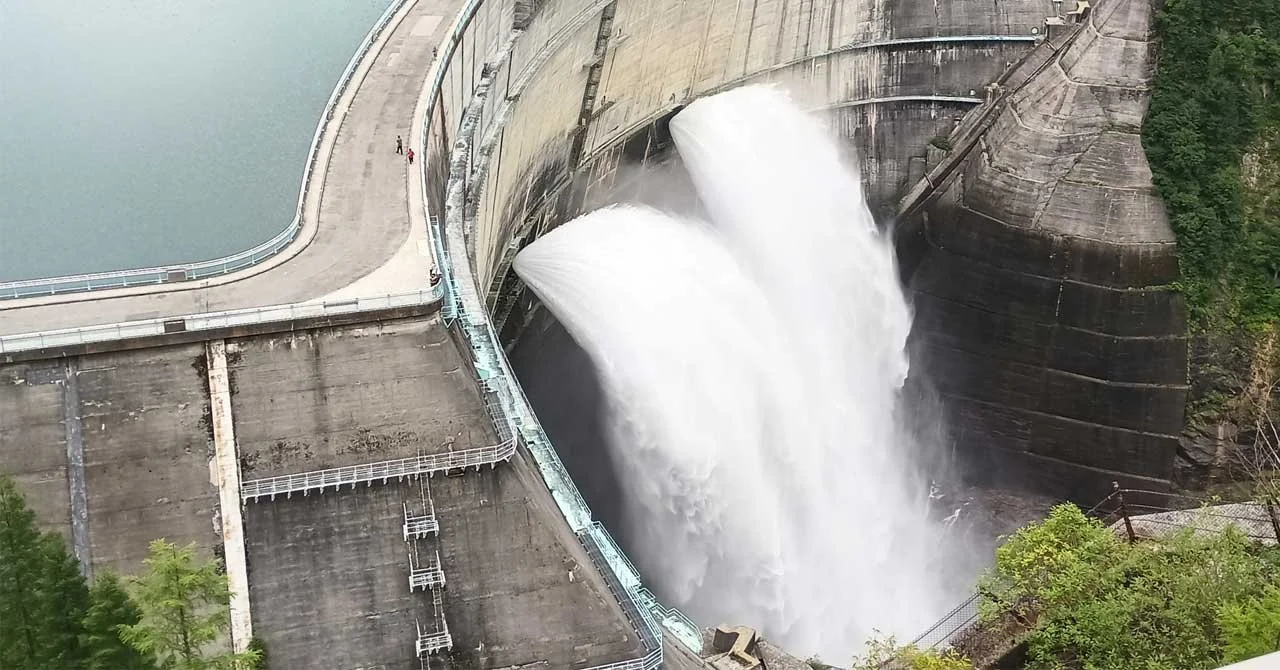
Flow regulation by dams seems at first glance to be a meaningful act of "resolving water shortages in the dry season". However, this unnatural regulation, which goes against the laws of nature, is literally suffocating the "flooded forests," the foundation of the Mekong's ecosystem. The flooded forests and midstream island trees of the Mekong originally possess a survival cycle in which the receding waters during the dry season expose their roots and trunks to the open air, allowing them to take in oxygen and "breathe". However, because upstream dams continue to discharge water during the dry season for power generation, water levels are maintained unnaturally high. As a result, the forests are deprived of time to dry and are forced to "drown" underwater.
"When I visited the Golden Triangle in 2023, having previously been an expert on East Africa, I was so shocked that I became a 'Mekong person' in just 48 hours. However, what I saw there was a devastating scene. With water levels kept high during the dry season, the forests lose their health, the trees wither, and the islands, losing their ground support, are washed away one after another. The pulsation of the Mekong is being rewritten by the machine called a dam." —— From the words left by Brian Finlay (Former President and CEO of the Stimson Center)
2. The Despair Shown by Data: Up to 80% of the Catch Will Disappear by 2040
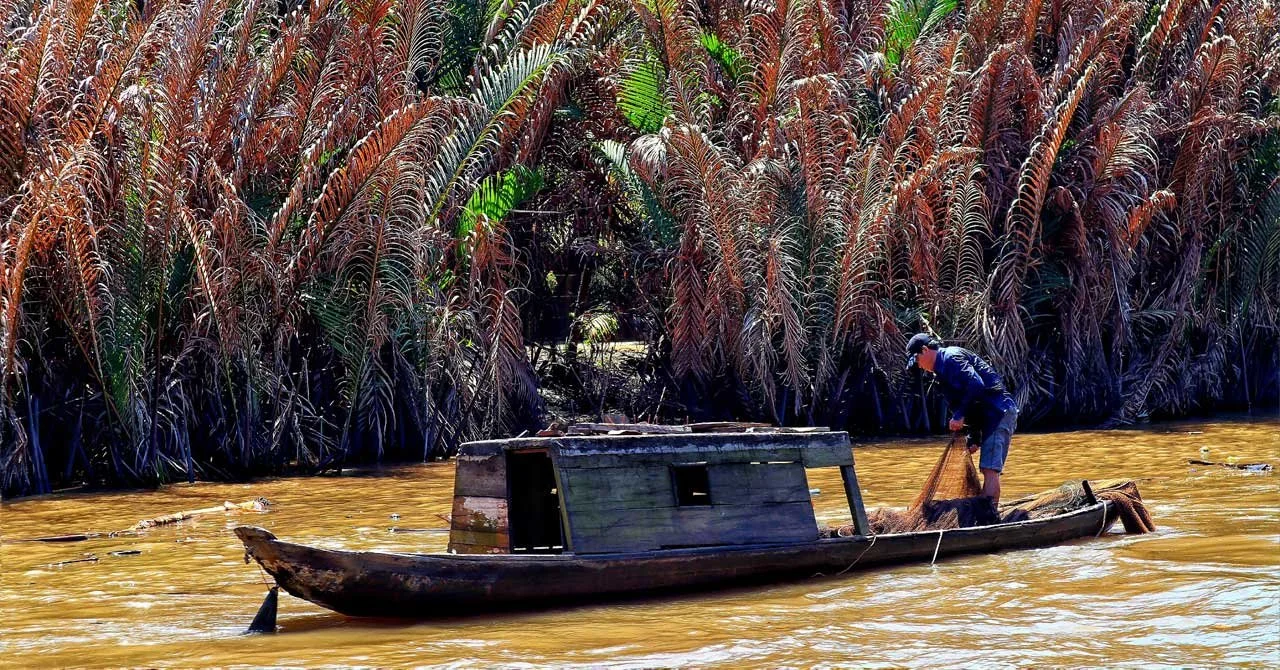
The Mekong River is the world's largest freshwater fishery and a precious source of protein for local residents. However, forecast data from the Mekong River Commission (MRC: https://www.mrcmekong.org) warns of an extremely bleak future. The walls of the dams not only physically block fish migration routes but also dam up the "nutrients (sediment)" that should be carried downstream. According to Reuters' satellite data analysis, every time a major dam is installed, the sediment flowing downstream decreases drastically, and in Vietnam's Mekong Delta, 5% of the rice-growing area has disappeared in the past five years alone.
By 2040, fish production in the Mekong basin will decrease by 40% to 80%. This is not just an environmental issue; it is a "crisis of survival" for 70 million people.
Farmers in the delta region are being forced to give up rice farming and switch to shrimp farming in salinized waters.
Once a land of abundance, it is now degrading into one of the lowest-income regions in Vietnam.
3. The Courage to Reject "Destructive Dams": The Hope of Floating Photovoltaics (FPV)
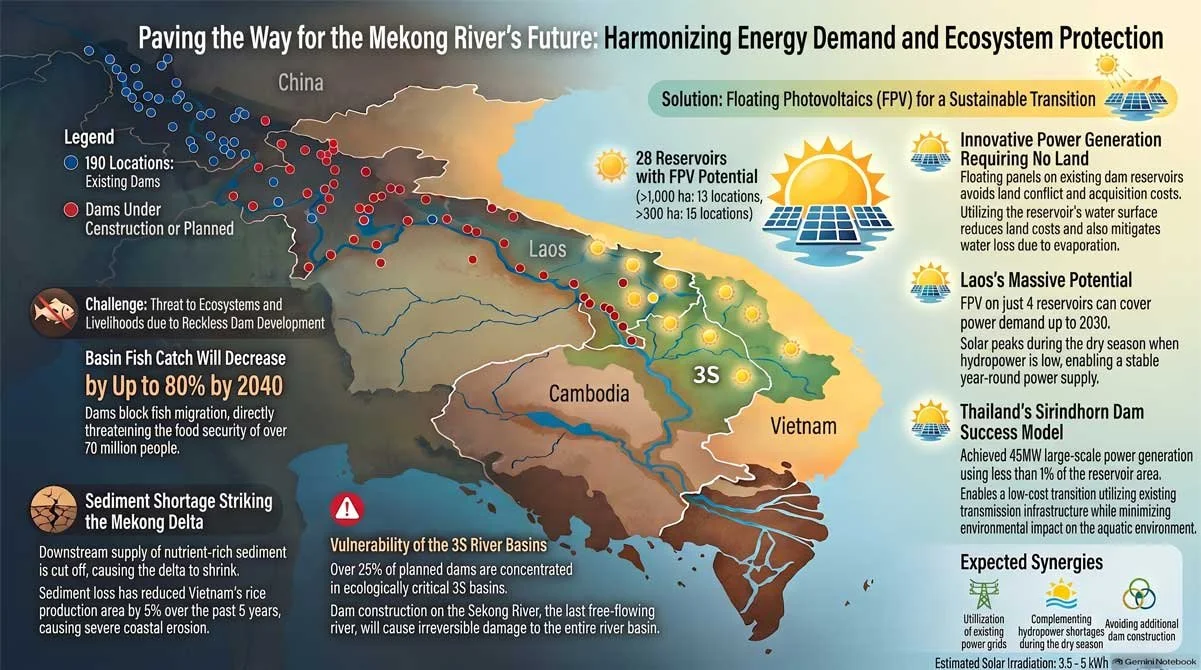
In the face of severe power shortages, the only realistic hope to replace dams is "Floating Photovoltaics (FPV)". Of particular note is the "Sekong A Dam" project in Laos. While this will block the last free-flowing tributary of the Mekong and deal a devastating blow to the ecosystem, the power obtained is a mere 86 MW. Recent studies have shown that simply installing FPVs on four existing dam reservoirs in Laos can completely cover the power shortage up to 2030. For example, floating FPVs on less than 3% of the reservoir area of the adjacent "Xekaman 1 Dam" can secure the same amount of electricity as the Sekong A Dam.
Utilization of existing facilities: The dam's power grid can be used as is, eliminating the need for new infrastructure construction.
Prevention of evaporation: The panels covering the water surface prevent evaporation from the reservoir, protecting water resources.
Seasonal complementary relationship: During the dry season (high solar irradiance) when hydropower generation decreases, FPVs reach their maximum output.
4. "Water Data" Becomes a Weapon: A New Phase in the US-China Intelligence War
A geopolitical "battle for data dominance" between the United States and China over the management rights of the Mekong River is intensifying.
The China-led "Lancang-Mekong Cooperation (LMC)" praises its own dam operations as an "exemplar" and emphasizes information transparency. On the other hand, the US-backed "Mekong River Commission (MRC)" has long pointed out the lack of data from upstream. However, there is a ray of hope here. According to the latest report from the IUCN (International Union for Conservation of Nature), the LMC side has begun to suggest that "there is room to review dam operations if there is scientific evidence".
For downstream countries, obtaining accurate flood and drought forecast data is a survival strategy in itself. Today, "water data" has become the front line of advanced intelligence that transcends physical interests.
5. The Approaching "Super El Niño" of 2026: Countdown to the Worst-Case Scenario
In 2026, the Mekong River may face its worst ordeal in history. A powerful El Niño phenomenon is suppressing monsoon rainfall, increasing the risk that the "flood pulse" (the periodic fluctuation in flood water levels that enhances material exchange and biological productivity between the river and the floodplain, maintaining ecosystem diversity) will disappear.
In fact, the 2026 rainy season has begun with record-low flow levels, and at Cambodia's Tonle Sap Lake, there are no signs of the lake expanding through reverse flow, as it should at this time of year. If upstream dams prioritize water storage under this extreme dryness, the downstream ecosystem and agriculture will receive a "death sentence".
We strongly urge dam operators to exercise "restraint," temporarily setting aside national power generation interests and considering downstream impacts. The courage to leave the dams empty and wait for rainfall is the only way to save the region from the impending devastating drought.
Conclusion: How Should We Pay the "Price of Affluence"?
The Mekong River is not the private property of the countries it flows through.
Furthermore, the international community must do everything in its power to deter any specific regional power from claiming it as its own.
It is a "public good" for the entire region and on a global scale.
The balance between energy demand and ecosystem protection is now about to cross its breaking point.
We must steer toward "system-wide planning" that wisely utilizes existing dams.
We should not continue to turn a deaf ear to the voices of the sinking forests and fish that hold their breath behind the dams that generate the power for our smartphones.
