

Drastically Cut Pesticides and Fertilizers! Farming Methods Using Ultra-High-Density Nanobubbles to Create Disease-Resistant "Strong Soil"
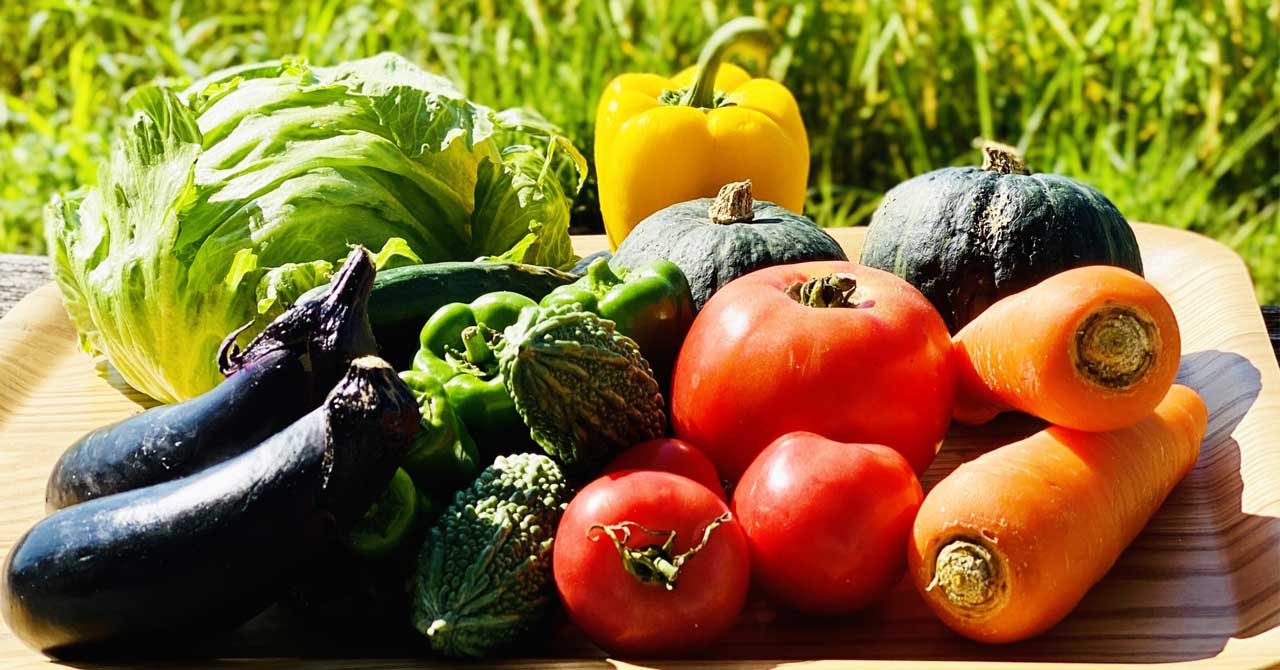
In agriculture, wanting to "increase yields," "reduce diseases," and "curb the soaring costs of fertilizers and pesticides" are pressing challenges faced by many farmers.
Particularly in recent years, fertilizer shortages and price spikes driven by the depletion of resources like phosphate rock have cast a dark shadow over global food production. "Ultra-high-density nanobubbles (hyperdense nanobubbles)" serve as an innovative technology to fundamentally solve these severe problems in the agricultural sector.
Today, we will introduce the groundbreaking mechanism that maximizes profitability while dramatically revitalizing crops using only the power of water and air.
Challenges in Modern Agriculture and Their Root Causes
Modern agriculture suffers from chronic issues such as poor crop growth, diseases, and the resulting over-dependence on pesticides and chemical fertilizers.
So, why do these problems occur?
The fundamental root causes lie in "soil degradation" and "oxygen deprivation."
When the soil balance is disrupted by continuous cropping or the excessive use of chemical fertilizers, beneficial microorganisms in the soil decrease, creating an environment where pathogens can easily multiply.
Furthermore, in anaerobic environments (oxygen-deficient states) like flooded rice paddies where water is kept for long periods, the soil falls into an oxygen-deficient state, which triggers an environmental issue by generating massive amounts of methane, a greenhouse gas.
In other words, soaring costs, crop diseases, and even environmental issues in agriculture are all linked to a common cause: "the environment inside the soil (a lack of microbial diversity and oxygen deficiency)."
To resolve this, rather than applying pesticides as a symptomatic treatment, it is necessary to fundamentally create "strong soil" that is resistant to diseases.
The Mechanism of Creating "Strong Soil" and Demonstrated Effects
1. Conditions for "Strong Soil" Proven by NARO and Dr. Yokoyama's Research
What kind of soil is resistant to diseases? In the latest agricultural microbiology, a research team at NARO (National Agriculture and Food Research Organization) led by Dr. Kazunari Yokoyama discovered a highly important fact. That is, "soil microbial diversity plays a decisive role in suppressing continuous cropping obstacles and soil diseases, as well as in crop growth and yields". (Reference: Watch Dr. Kazunari Yokoyama's explanatory video here [3. "The Galaxy in the Soil": The Global Biosphere Supported by Microbial Diversity | Kazunari Yokoyama]) The most crucial element to maintain this beneficial microbial diversity and increase bacteria is "oxygen". There are two ways (one or both) to utilize ultra-high-density nanobubble water for crops depending on the type of crop:
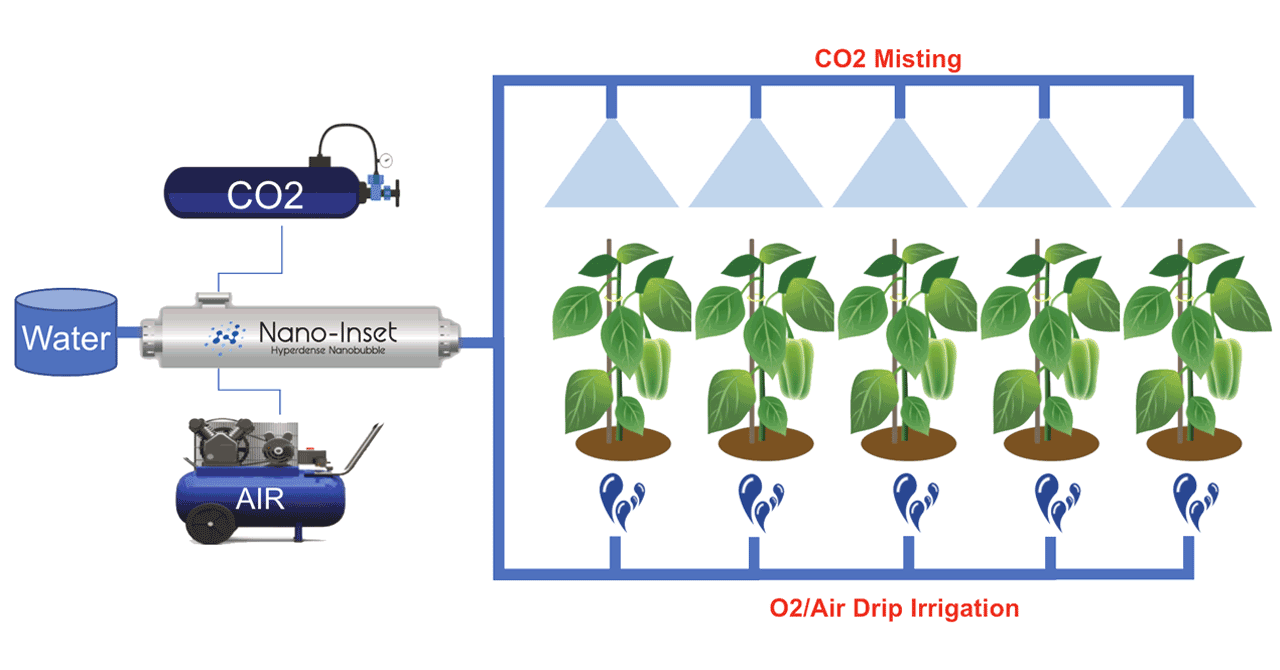
Crops where the "leaves and fruits" themselves are the product: Misting with CO2 nanobubbles.
All vegetables and fruits, including root crops: Drip irrigation with oxygen and air.
The "Nano-Inset" developed by CWM can encapsulate nano-sized bubbles at a world-class density of 10 billion per 1 milliliter of water. As this ultra-high-density nanobubble water delivers oxygen deep into the soil, the soil is maintained in an aerobic environment, and aerobic bacteria are explosively activated. As a result, it protects crops from diseases and creates the best possible growing environment. This is the mechanism of creating "strong soil."
2. Agricultural Challenges Solved by Nanobubbles
By creating strong soil, dramatic solutions are brought to the current challenges of agriculture as follows:
① Significant Reduction in Fertilizers
According to a paper by Fudan University in China, simply changing "ordinary water" to "nanobubble water" can achieve the same yield as before using about 25% less fertilizer, and it has been confirmed that rice yields increased by approximately 8%.
② Pesticide-Free Pest Control and Disease Resistance Utilizing "Improved Drainage"
When nanobubble water permeates the soil, it physically improves drainage, eliminating any worry of "causing root rot by giving too much water". Taking advantage of this characteristic, strawberry farmers in Kochi Prefecture have succeeded in physically washing away spider mites by frequently spraying water on the leaves, drastically reducing the use of pesticides. Furthermore, by using FROW, which combines Nano-Inset with ozone, pathogens and viruses can be eliminated without pesticides.
③ Suppression of Greenhouse Gases and Ecosystem Protection
In anaerobic environments like rice paddies, massive amounts of methane, a greenhouse gas, are generated, posing a global environmental problem. By transforming rice paddies into aerobic environments using nanobubble water, methane emissions can be significantly suppressed, realizing environmentally friendly, sustainable agriculture. Moreover, while preventing global warming, it also protects the lives of newts, which hold the key to the future of medicine. This makes it possible to achieve "Nature Positive" agriculture that saves both the environment and the ecosystem.
For more details, please see "Is the Future of Medicine in the Rice Paddies? Protecting Newts Will Save Humanity".
3. Dramatic Profit Increases through High Quality and Extended Shipping Spans
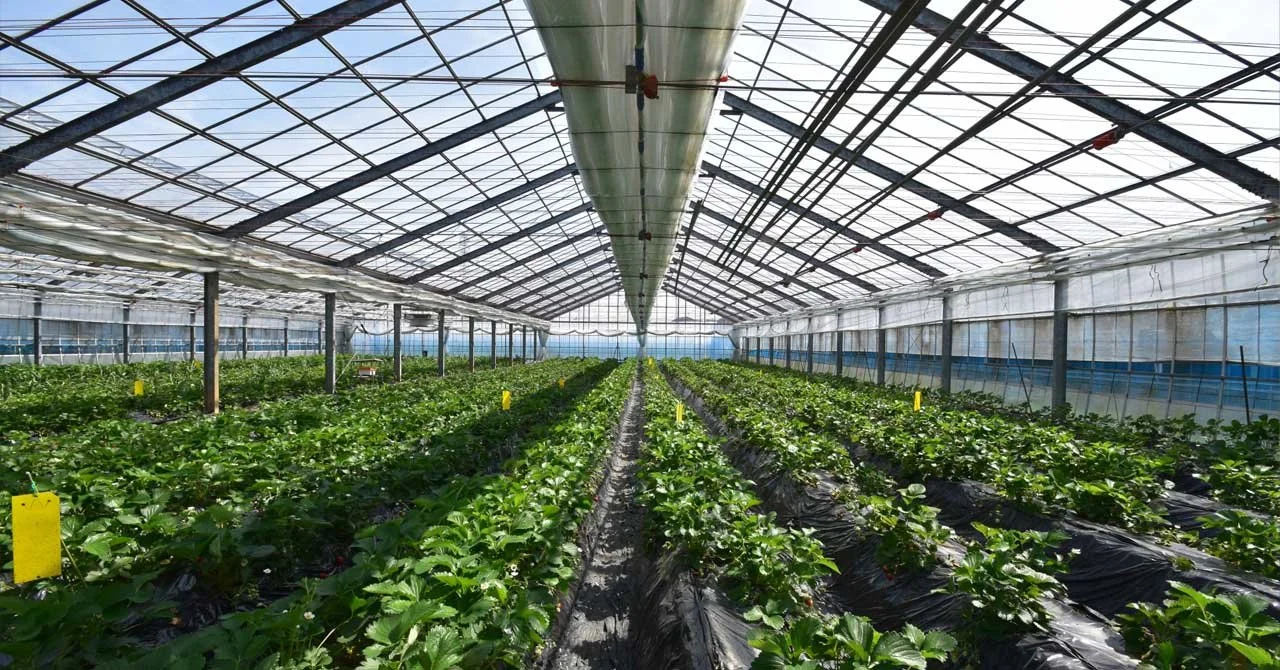
By making the soil stronger, the following profit increases are occurring at actual farming sites.
◾️ Fetching the "Highest Prices" in the Market (Quality Improvement)
Strawberries:Sugar content jumped to 16 degrees or higher, significantly improving the taste, which fetched the highest prices in the market, leading to a substantial increase in revenue.
Melons and Eggplants: Color, gloss, and firmness of the fruit improved, raising their evaluation grades in the market and achieving higher unit prices.
◾️ Extended Harvest Periods and Explosive Increases in Yield
Eggplants: Usually, growth vigor fluctuates in cycles (up and down) depending on the season, but now flowers bloom and bear fruit consistently and stably all year round. As a result, production increased by about 30%, causing "happy screams" that they cannot keep up with the harvest due to a labor shortage.
Ginger: In open-field cultivation, disease risks were eliminated. While neighboring farmers suffered poor harvests of around 5 tons per tan (approx. 0.1 hectare), they recorded an overwhelming, region-topping harvest of "8 tons".
Strawberries: Normally, the harvest season ends in early April and the plants weaken. However, in greenhouses using nanobubbles, the leaves continued to flourish greenly even into June, with roots gripping so strongly they were hard to pull out, continuously bearing fruit over a long period.
◾️ Recovery from Viral Diseases
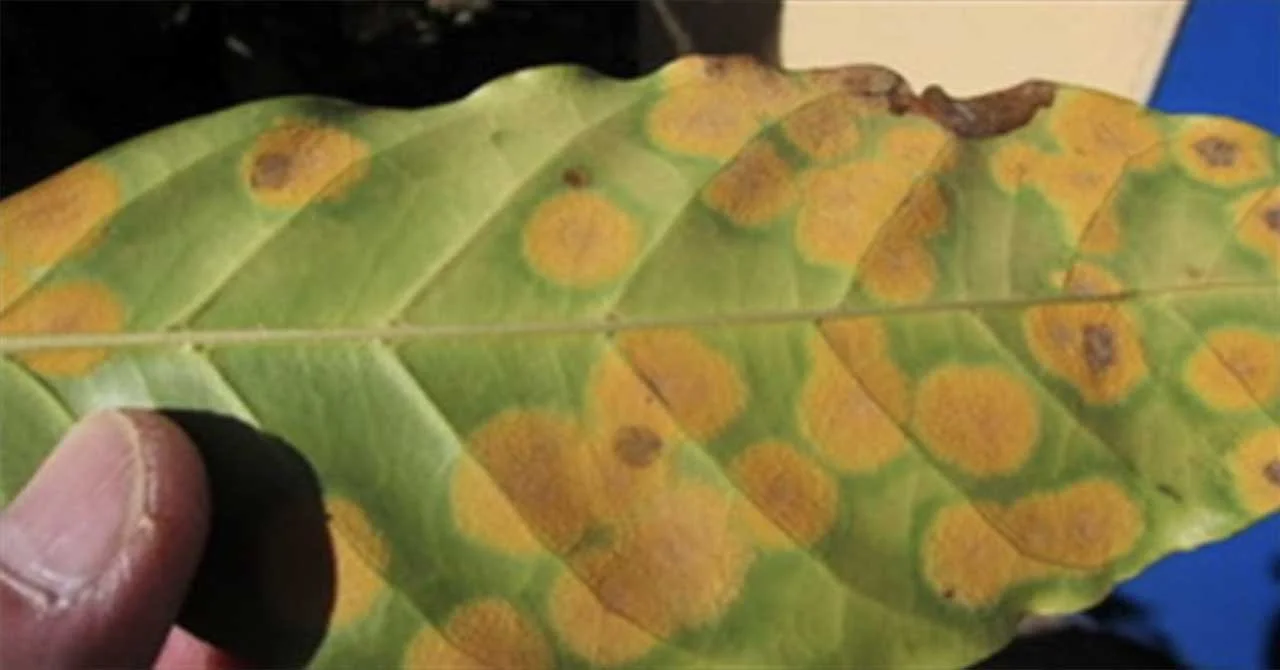
In luxury melon cultivation, there is a vicious viral disease known as "yellowing necrosis," where infected plants normally must be thinned out (disposed of).
However, in greenhouses where nanobubbles were introduced, a case was confirmed—unthinkable by conventional agricultural wisdom—where a melon plant infected with this disease continued to grow, its newly grown leaves recovered to a healthy green, and it bore fruit normally
ISO (International Organization for Standardization) Officially Recognizes Nanobubbles' Growth-Promoting Abilities
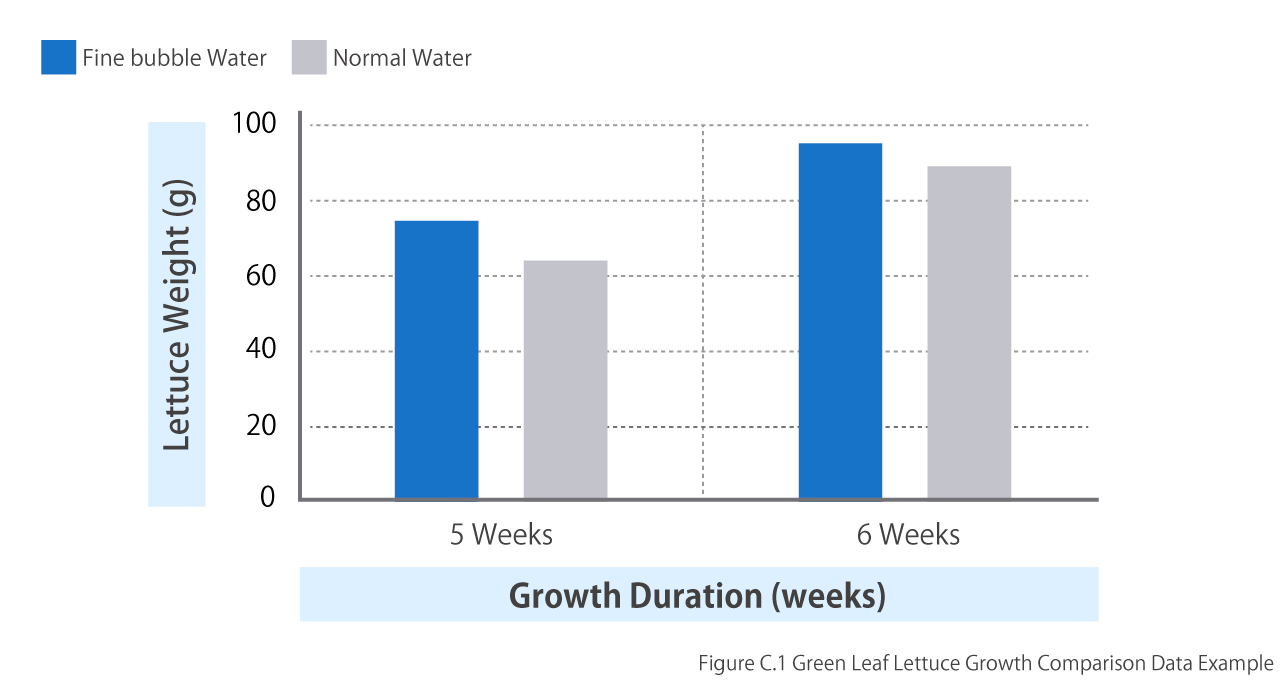
These effects are not just anecdotal reports from the field; they are also scientifically evaluated by global public institutions.
In April 2021, the ISO (International Organization for Standardization) issued an official technical report (ISO/TR24217-2:2021), announcing that nanobubble technology has confirmed positive effects on increasing harvest yields and improving growth rates in agriculture (such as hydroponics).
This internationally proves it to be a highly promising technology for global SDG goals like "Zero Hunger" and "Life on Land".
Note: In addition to the approach of delivering oxygen to the roots, for cultivations where the "leaves" themselves are the product, like tea (tea leaves), applying CO2 nanobubble misting (spraying) is expected to have a highly effective direct impact on promoting photosynthesis.
Next-Generation Agriculture Realized by Overwhelming Cost Performance
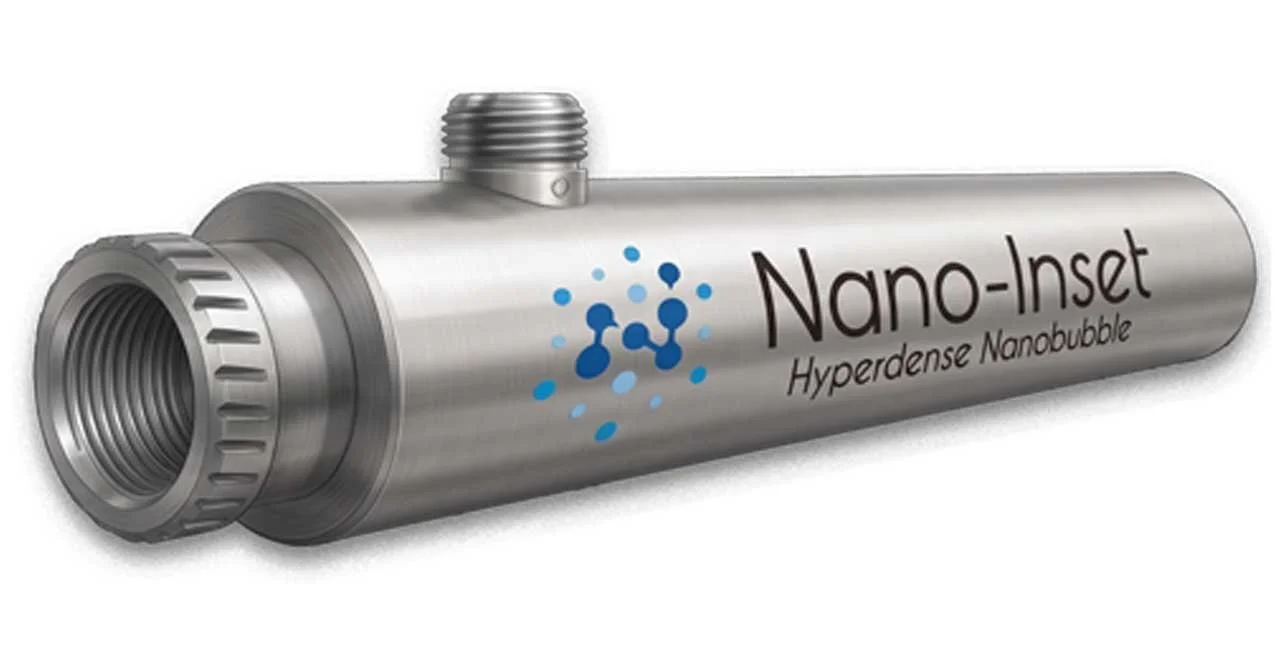
The key to solving all agricultural problems lies in creating "strong soil" that keeps the environment aerobic and protects crops from diseases using the power of microorganisms. CWM's "Nano-Inset" series, which achieves this, boasts extremely high cost-effectiveness in both initial capital expenditure (CAPEX) and operating expenses (OPEX).
Power consumption is "1/48th" of conventional models: Its proprietary design minimizes running costs such as electricity bills.
Zero moving parts, break-free for "over 10 years": The main body of the device is made of an extremely durable polymer material, with absolutely no electrical or moving parts. Therefore, it is resistant to clogging from dirt, and maintenance costs are almost nonexistent.
This device, which can be easily introduced by simply connecting a pump and an air source (or oxygen generator), is already being deployed in over 60 locations in Kochi Prefecture, taking advantage of unique local subsidy systems.
Conclusion: Transitioning to Smart Agriculture with an Eye on the Future
Lowering costs and maximizing profits, while protecting the environment and ecosystems. The turning point toward "sustainable and profitable agriculture" has arrived. If you are interested in this innovation, please be sure to contact us.
CWM is a Yokohama-based company, and we believe that sincerely applying the power of nanobubbles has the potential to protect both the environment and the lives of the people who depend on it.
