

[A Revolution in the Field] The "Magic Bubbles" Saving the Aquaculture Industry~ The Future of Fisheries: "Nurturing and Protecting" Realized by Nanobubbles ~
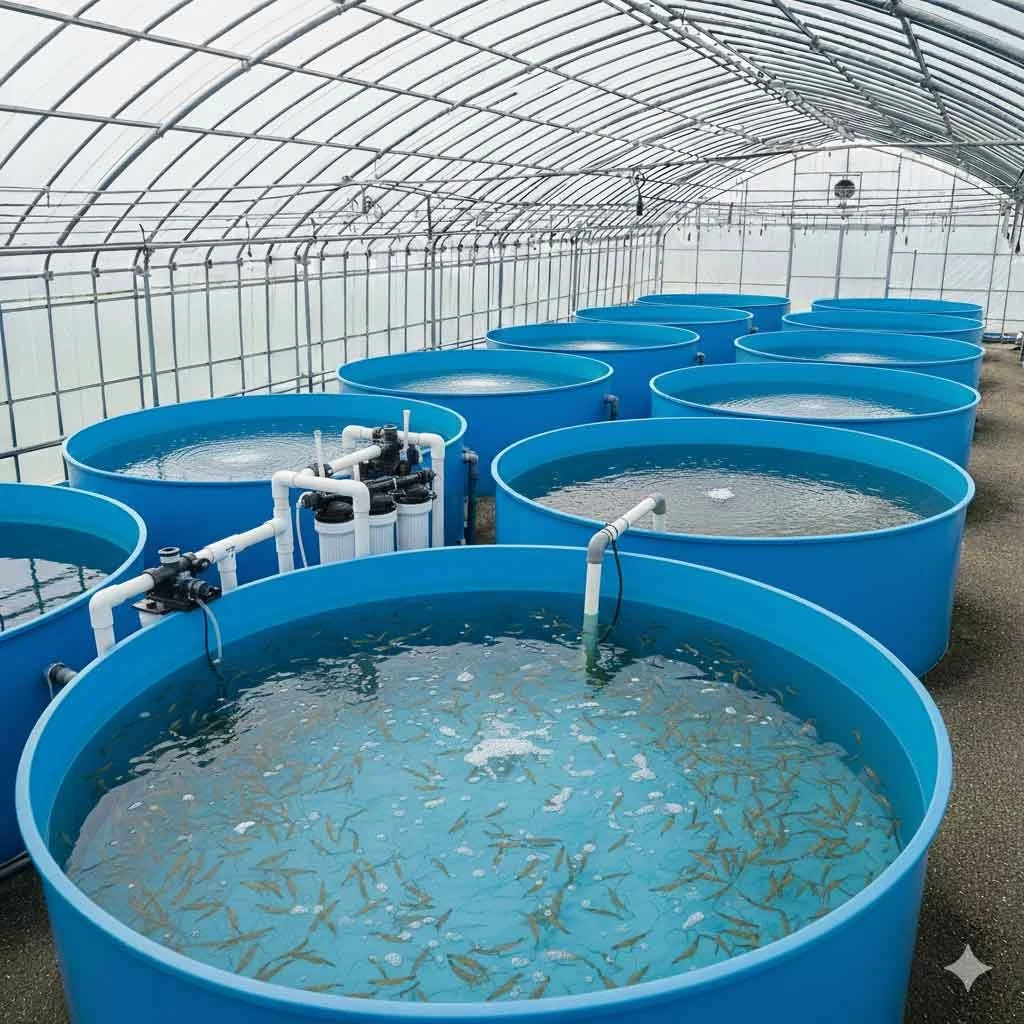
With the global population rising, a food crisis—specifically a "protein crisis"—is a growing concern.
Aquaculture is widely expected to be the solution.
Approximately half of the fish currently on our dinner tables are already farmed, and the importance of this industry continues to grow.
However, the current aquaculture sites striving to supply fish efficiently are ironically facing a serious dilemma: "The more fish you raise, the more the water—their life source—becomes polluted."
High-density rearing environments lead to chronic oxygen deficiency, water deterioration due to leftover feed and excrement, and the spread of disease.
Consequently, this causes issues such as the excessive use of chemicals and environmental strain on oceans due to the discharge of polluted water.
To break this dilemma between "Productivity" and "Environmental Conservation," a technology originating from Japan is now sparking a revolution at aquaculture sites worldwide: "Nanobubbles."
How can microscopic bubbles, invisible to the naked eye, save the aquaculture industry? Here is the mechanism and its dramatic effects.
The "4 Powers" of Nanobubbles Transforming Aquaculture
Nanobubbles are ultra-fine bubbles with a diameter of less than 1 micrometer (1/1000th of a millimeter). These bubbles possess unique properties, such as "staying in the water for long periods" and "activating biological cells."
These properties lead to solutions for the challenges faced by aquaculture sites through the following four aspects:
1. [Growth Promotion] Increasing Metabolism with the Magic of Oxygen
With traditional aeration (bubbling), large bubbles quickly escape to the water's surface, making oxygen supply inefficient. Nanobubbles, however, remain submerged for a long time, delivering oxygen directly into the bloodstream through the fish's gills.
For a human, this is akin to being constantly inside a "hyperbaric oxygen chamber."
With sufficient oxygen distributed throughout the body, the fish's metabolism becomes active, and their appetite increases.
As a result, they grow larger and faster than usual. If the time to shipment can be shortened, production costs can be reduced accordingly.
2. [Immunity Enhancement] Drawing Out the Fish’s "Vitality"
A sufficient oxygen supply improves the fish's basic physical strength.
Even in high-stress, high-density rearing environments, fish raised in nanobubble water have higher immunity and are less prone to illness.
Because the fish themselves become healthier, this leads to a reduction in the use of drugs, as described below.
3. [Disinfection & Reduced Drugs] Creating Safe Water Without Relying
on Chemicals
The most nerve-wracking aspect of aquaculture is disease prevention and treatment.
Until now, there has been a reliance on chemicals such as antibiotics.
However, nanobubble technology—specifically functional nanobubbles using gases like ozone—demonstrates powerful sterilization and virus inactivation effects.
By purifying and disinfecting the rearing water itself, the risk of disease outbreaks is suppressed at the root.
This makes it possible to drastically reduce the amount of medication used, contributing significantly to increasing brand value as "Safe and Secure Farmed Fish."
4. [Wastewater Treatment] From "Pollution Source" to "Purification Hub"
Water discharged from aquaculture farms into oceans and rivers contains a large amount of organic matter (leftover feed and feces), which is viewed as a problem causing red tides and oxygen-depleted water masses in surrounding waters.
Nanobubbles play an active role here as well.
When oxygen is pumped into wastewater treatment tanks via nanobubbles, "aerobic microorganisms"—which function to clean water—are explosively activated.
These microorganisms decompose and purify organic matter at a tremendous speed.
With the introduction of nanobubble technology, aquaculture farms have the potential to be reborn from places that "pollute the sea" into "purification hubs" that return clean water to the ocean.
"Sustainable Fisheries" Create the Next Value
Nanobubble technology is not merely a tool for raising fish efficiently.
It makes fish healthy, reduces drugs, and minimizes environmental impact. It is truly a core technology for evolving aquaculture into a sustainable industry.
Furthermore, these environmental contributions on the ground—such as energy savings (CO2 reduction) through efficient oxygen supply and the suppression of greenhouse gases (like methane) through wastewater purification—should be evaluated in the future as new economic values, such as "Carbon Credits."
"Raising fish in clean water."
This simple act protects the global environment and generates economic incentives. This is the future of the fisheries industry that we aim to achieve.
