

Challenges in Marine Aquaculture and the Roadmap to Solutions
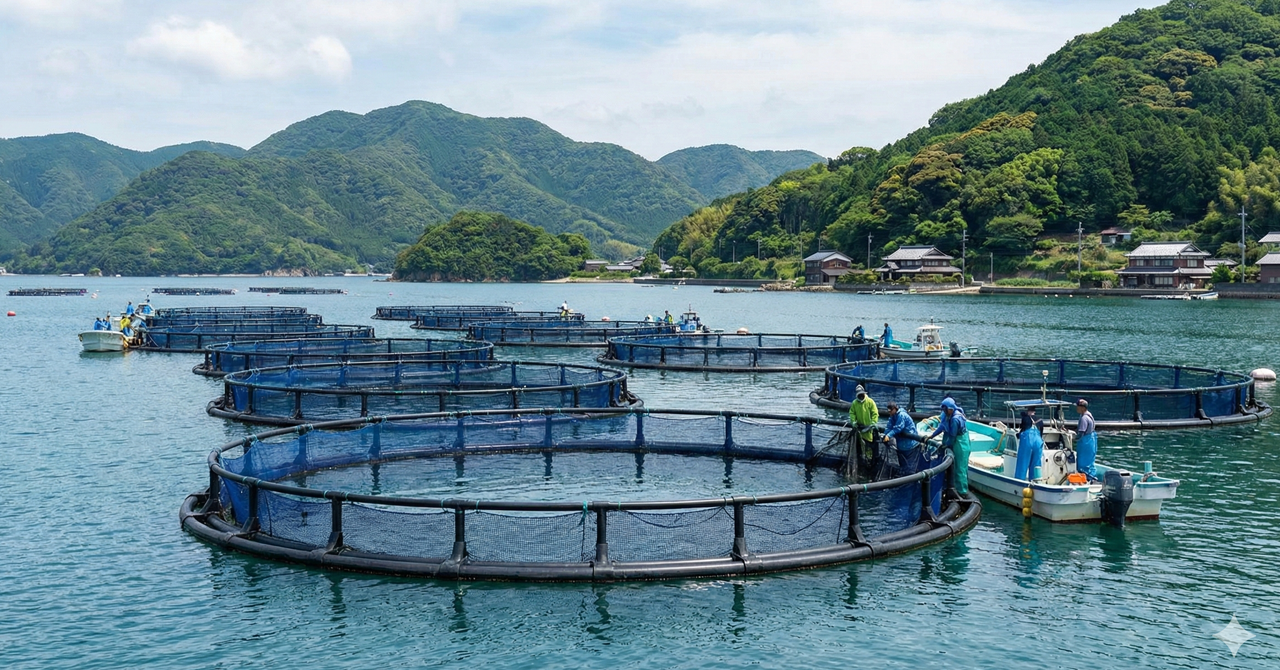
A series of such incidents has occurred in rapid succession within Japan.
The common thread linking them all is the same mechanism: massive schools of sardines wander into marine aquaculture facility sites → oxygen levels drop rapidly → mass mortality of the farmed fish occurs.
The aquaculture industry is one of the sectors in which we at CWM hold the strongest interest.
Aquaculture generates massive amounts of sludge derived from fish feces and leftover feed (residue), releasing it into the natural world.
In regions lined with closed-system aquaculture farms—commonly seen in shrimp farming—environmental pollution caused by this sludge has reached extremely serious levels.
And as we have repeatedly stated in this blog, sludge generates large quantities of methane gas. This is not only a cause of extremely serious global warming but also inflicts significant damage on ecosystems.
This situation applies equally to the marine aquaculture that set the stage for the recent incidents.
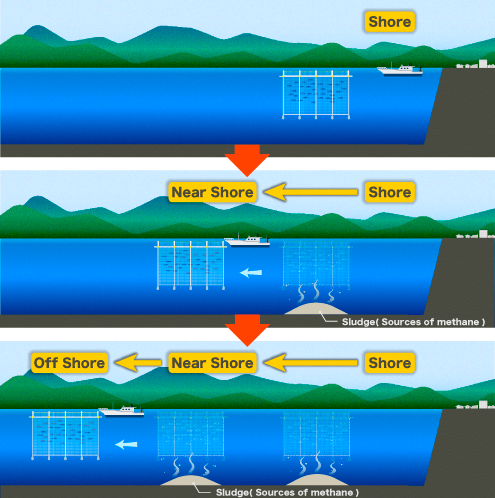
Massive amounts of residue and feces accumulate beneath the sea cages, emitting methane gas.
In the process of this methane gas slowly rising to the surface, it negatively impacts the farmed fish in terms of survival rates and feed efficiency.
Consequently, aquaculture operators are finding themselves in a situation where they are forced to gradually move their cage locations further offshore.
Our patented nanobubble generator technology, the "Nano-Inset," is capable of handling a large-scale water volume of 5 tons per minute.
Utilizing this technology offers benefits such as improved survival rates and growth rates for farmed fish.
Furthermore, it enables crisis response capabilities for the hypoxic(low-oxygen) situations described in the news articles above.
Beyond that, because it can resolve the issue of sludge accumulated on the seabed, it can preemptively prevent the various economic losses associated with forcing cages to move offshore.
Naturally, by quantifying this effect, we can also anticipate the creation of carbon credits.
We at CWM are widely seeking partners in this field.
If you are interested, please do not hesitate to contact us.
