

How is Methane Measured in Rice Paddies?An Surprisingly "Special Method" and the "Global Standard" Behind It
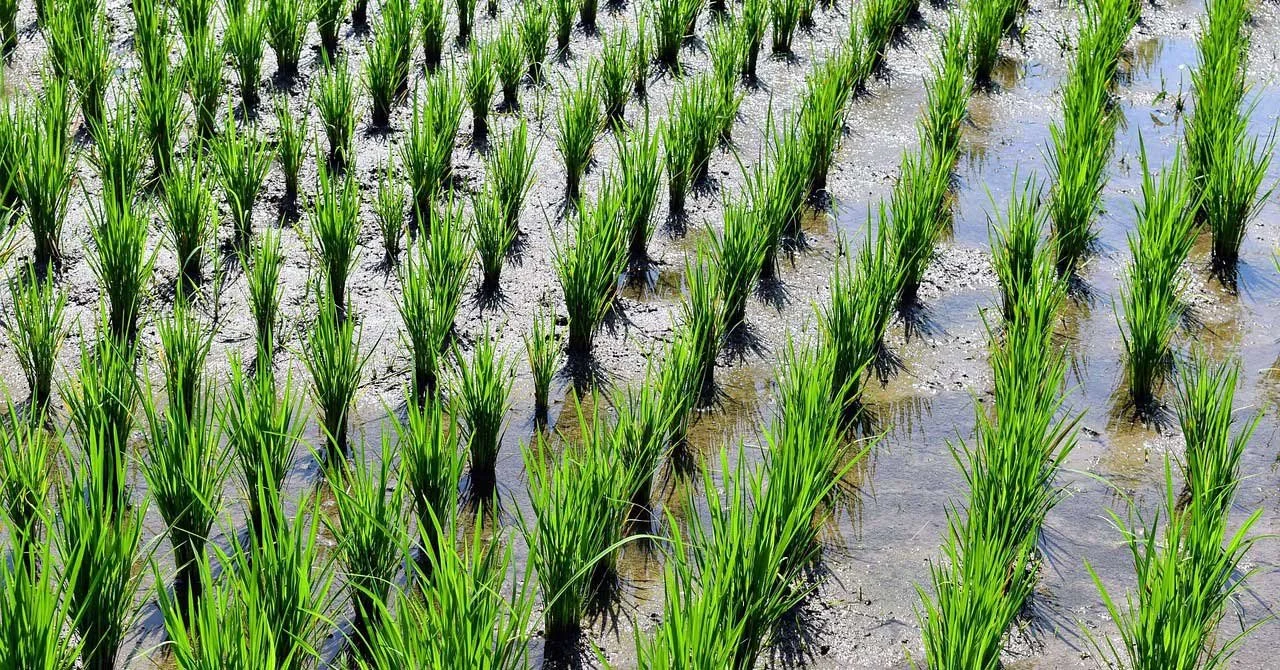
"How exactly do you measure methane?" Have you ever wondered this?
Methane gas is known as one of the causes of global warming.
Actually, did you know that the "rice paddies" where our daily rice is grown also emit this gas?
"What? Gas from rice fields? So, do you just measure it with the latest high-tech sensor that goes beep?"
Many of you might think so. However, in reality, measuring rice paddies involves a "special method" that betrays our high-tech imagination.
Why is measuring "methane" so important?
In the first place, why is it necessary to go through so much trouble to measure methane?
It is because methane is a powerful gas with a greenhouse effect about 25 times stronger than carbon dioxide.
Surprisingly, it is said that over 10% of the world's anthropogenic methane emissions come from "rice paddies.
Rice farming supports the global population, but at the same time, climate change countermeasures are an urgent issue.
We now know that techniques like extending the period of draining water (mid-summer drainage) can reduce methane.
However, unless we can accurately prove "how much it actually decreased," we cannot call it an effective countermeasure.
That is why "technology to measure accurately" determines the future of our planet.
Can't we use "sensors" in the rice fields?
If you want to measure gas in the air, you might think you could just set up a high-performance machine in the rice field.
However, research sites face "difficulties unique to rice paddies.
Wind influence:
Since it is outdoors, even if gas is released, it is immediately blown away.Unevenness of location:
It varies wildly by spot—coming from the rice stems or bubbling up from the mud.
In other words, just measuring the air won't tell you exactly "how much was released from this paddy."This is where the world-common "special method" comes in.
Analog technology using "Transparent Boxes" and "Syringes"
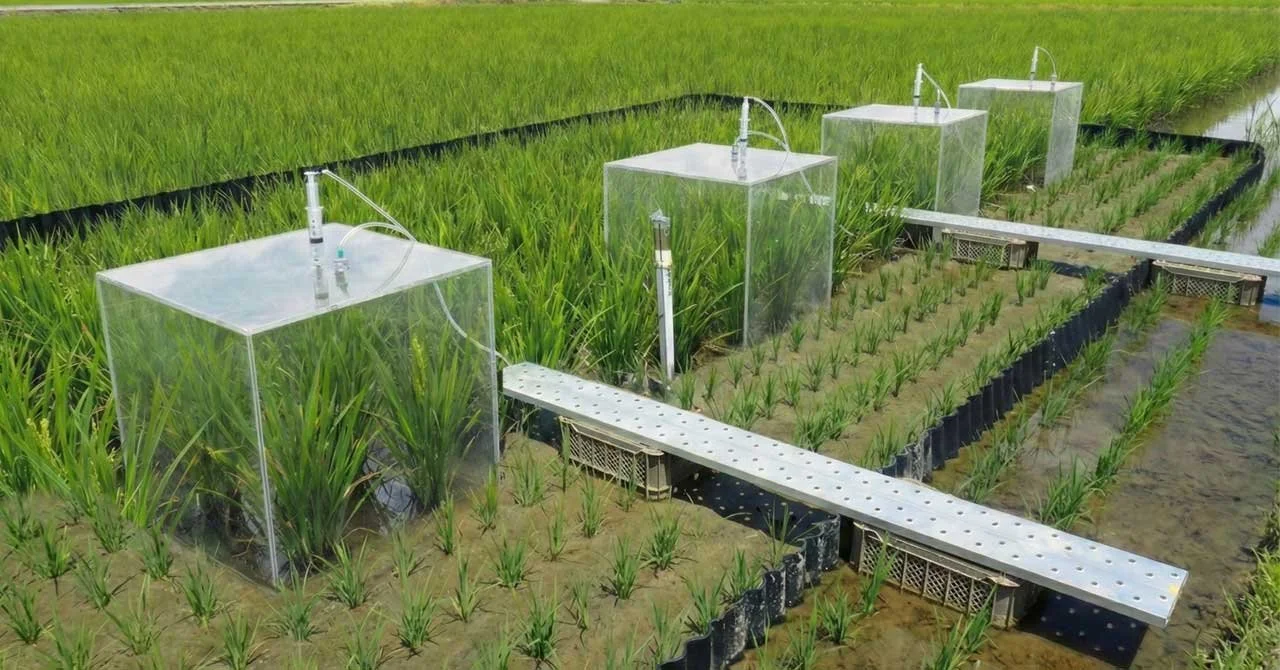
That method is technically called the "Chamber Method."
The process is surprisingly analog.
1.Prepare a transparent plastic box (chamber).
2.Place it over the rice plant to cover it, putting a "lid" (seal) on the paddy water.
3.Wait for a while, and then suck out the air accumulated inside the box with a syringe.
Yes, "physically trapping and catching it" was the most reliable method.
The research team performs this steady work, walking into the site on their own feet even on hot summer days, setting up these boxes, and collecting air with syringes.
A "Global Yardstick" Created by Japanese Researchers
You might have thought, "What? Just placing a plastic box?"
However, this seemingly simple method is actually a highly calculated scientific technique.
The team that created the international rulebook to ensure this method could be performed accurately all over the world was led by Professor Kazunori Minamikawa of the National Agriculture and Food Research Organization (NARO).
Professor Minamikawa and his colleagues formulated the "Guidelines for Measuring CH4 and N2O Emissions from Rice Paddies by a Manually Operated Closed Chamber Method."
This manual has been adopted as the standard method by the Paddy Rice Research Group of the "Global Research Alliance (GRA)," a global greenhouse gas research network.
Researchers in Southeast Asia, South America, and around the world are measuring methane using this same method (Chamber Method) with this "Japanese manual" in hand.
Thanks to the work of Professor Minamikawa and his team, it has become possible to correctly compare global data and develop countermeasures.
Summary: Science is done on foot
When you heard "special method," you might have imagined high-tech equipment, but in reality, it was the crystal of the sweat and effort of researchers in rain boots, and the precise "manual" that supports them.
Thanks to Japanese researchers accumulating accurate data and spreading these measurement methods to the world, we can now correctly understand "how to grow eco-friendly rice."
The transparent boxes seen in summer rice paddies are not mere tools.
They are the very "frontlines of research" connecting our food to the future of our planet.
Reference material:Kazunori Minamikawa