

Leader’s Voice: On the Retirement of Mr. Yoshihide Suga
Hiroshi Sasaki, Founder, Clean Water Mechanism
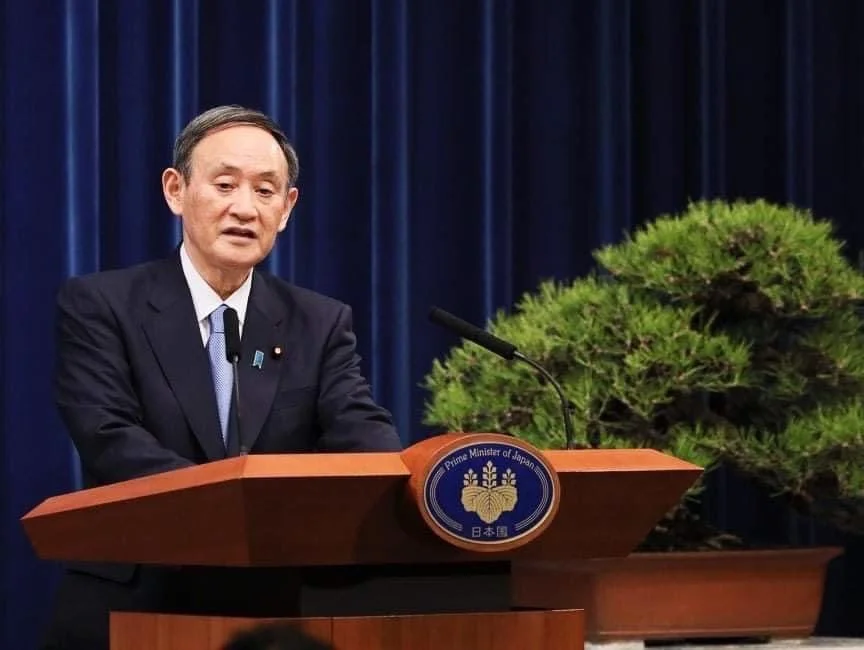
Two days prior to writing this column, Mr. Yoshihide Suga announced his retirement due to advanced age. He led Japan as Prime Minister after taking the reins of government from the late Prime Minister Abe, who had ended his long administration due to health reasons amidst the COVID-19 pandemic.
He released the following statement via social media:
(Quote)
I, Yoshihide Suga, have decided not to run in the upcoming general election and have resolved to pass the torch to the next generation.
Born into a farming family in snowy Akita, I jumped into the world of politics in Yokohama, a place where I had no ties of land or blood.
Starting from zero, I was able to serve as a member of the House of Representatives for 30 years, as well as Chief Cabinet Secretary and Prime Minister.
By breaking down bureaucratic silos, I believe I was able to realize policies that were previously thought impossible and pave the way for Japan in the next era. These include the Hometown Tax (Furusato Nozei), insurance coverage for infertility treatment, the realization of a decarbonized society, establishing a tourism-oriented nation through inbound travel, lowering mobile phone fees, the unified management of dams during disasters, the establishment of the Digital Agency, and attracting semiconductor manufacturing.
It is also a deep memory for me that I decided to administer 1 million vaccine doses per day, contributing to the containment of the COVID-19 pandemic.
All of this is due to your long-standing support and generous encouragement, and I would like to express my heartfelt gratitude once again.
(End Quote)
Although Mr. Suga’s tenure as Prime Minister was short—lasting only one year—he served as the Chief Cabinet Secretary, the pivotal No. 2 position, from the inception to the end of the Abe administration. He held this post longer than anyone in history, leaving behind an astonishing number of achievements.
Among these, I would like to focus here on the "unified management of dams during disasters" mentioned in his statement.
It all began with Typhoon Hagibis (Typhoon No. 19) in 2019.
This typhoon formed on October 6 and made landfall on the Izu Peninsula shortly before 7:00 PM on the 12th as a "large and strong" storm.
Hakone in Kanagawa Prefecture recorded 922.5mm of rainfall in 24 hours (a record for Japan), and observation records were broken in many locations across the Kanto, Koshin, and Tohoku regions.
The capacity of dams and rivers everywhere reached their limits, eventually causing damage across all of eastern Japan, resulting in one of the worst river disasters in the post-war era.
In Tokyo, as all flood control dams in the upper reaches of the rivers filled up one after another, an emergency meeting was being held at the Prime Minister's Office, led by then-Chief Cabinet Secretary Suga. They were desperate to find a way to avoid, at the very least, a catastrophic flood in Tokyo. It was certain that if the levees of Tokyo's major rivers—the Tone, Edo, and Tama rivers—were to breach, it would cause devastating human and physical disasters.
As the time limit approached moment by moment, an idea was presented with the preface, "I say this knowing it may be impossible."
The idea was: "Pre-release water from all dams and reservoirs to prepare for the typhoon."
This may sound like a matter of course, but within the governance structure of Japan, it was unprecedented.
Flood control dams and retarding basins are managed by the Ministry of Land, Infrastructure, Transport and Tourism (MLIT); hydroelectric dams by the Ministry of Economy, Trade and Industry (METI); and irrigation dams and reservoirs by the Ministry of Agriculture, Forestry and Fisheries (MAFF).
Management is fragmented by these vertical bureaucratic walls.
Furthermore, because complex water rights are involved, in such situations, it was typically only possible to mobilize facilities under the jurisdiction of MLIT.
They tore down these inter-ministry walls.
Under the leadership of the Prime Minister's Office, an exceptional order was issued to pre-release water from all water storage facilities.
To do this without passing it through parliament, without legislation, and without even a cabinet decision—driven solely by the Prime Minister's Office—was not only a massive decision but a politically perilous one.
There was no guarantee that the sites could operationally implement the instructions within such a short time.
Furthermore, if the levees broke despite these measures, it was obvious that the opposition parties and the media would launch an unfair and fierce pursuit of responsibility.
Nevertheless, Prime Minister Abe gave the green light without hesitation to this proposal coordinated by Mr. Suga.
As expected, agricultural stakeholders and power companies opposed it fiercely, but Mr. Suga did not flinch, pushing the decision through with forceful methods.
I was in Tokyo at the time, staring at surveillance camera footage, half-resigned to the fact that the water level of the Edo River was rising visibly and a breach was imminent.
However, this emergency measure created a water storage capacity equivalent to nearly 10 Yamba Dams (the largest flood control dam upstream of Tokyo). As a result, a levee breach in Tokyo was avoided by a hair's breadth, and disaster was averted.
It was truly a miraculous event.
Later, based on this experience, this operation was codified into law under Chief Cabinet Secretary Suga as the "Pre-release Guidelines." Specifically, the following mechanisms were established:
Implementation of Pre-release: When heavy rain is predicted, even water utilization dams (for power/agriculture) must release water in advance to lower water levels and secure empty capacity to store floodwater.
Unified Operation Agreements: In 109 river systems nationwide, the national government, local governments, and power companies concluded "Flood Control Agreements." A system was built where river administrators (MLIT) can instruct or request the release of water from water utilization dams as well.
Clarification of Loss Compensation: A mechanism was established for the government to compensate for losses incurred due to the inability to generate power, making it easier to obtain cooperation from private companies (power companies, etc.).
This realized a water storage capacity of approximately 4.5 billion cubic meters nationwide (equivalent to the effective storage capacity of about 50 Yamba Dams) without spending any budget.
Considering that building a single flood control dam costs tens to hundreds of billions of yen and takes decades, the magnitude of the contribution this made to "National Resilience" is immeasurable.
The Isewan Typhoon of 1959 caused over 5,000 deaths despite making landfall in the Kii Peninsula, a region with a relatively low population. Typhoon Hagibis (2019) struck densely populated areas all over the country, yet the death toll was less than 100.
Japan’s land is undoubtedly becoming more resilient, and Mr. Suga left a remarkably significant legacy in this regard.
Water supply, sewage, the natural environment, climate change, and flood control. The theme of "water" is extremely broad.
Since I began addressing social issues related to water as a member of a consulting firm, I have been involved in many projects. However, because my entry point was risk management focused on disaster countermeasures, I have also been involved, if only slightly, in flood control and Integrated Water Resources Management (IWRM).
Flood control is, without a doubt, nation-building.
As an aside, in Vietnamese, the word for "Nation State" is Nhà Nước. Nhà means "House," and Nước means "Water."
I must confess here that I live in Mr. Suga’s electoral district. His office is located just a few kilometers from my home.
However, I hope you will agree that my praise for his achievements—even taking just this single accomplishment—is not favoritism born of local ties.
With heartfelt respect for a great leader, Mr. Yoshihide Suga, I wish to convey this message: "You have made this nation stronger and richer. Thank you. Otsukaresama-deshita (Thank you for your service)."
