

Is the Future of Medicine in the Rice Paddies? Protecting Newts Will Save Humanity
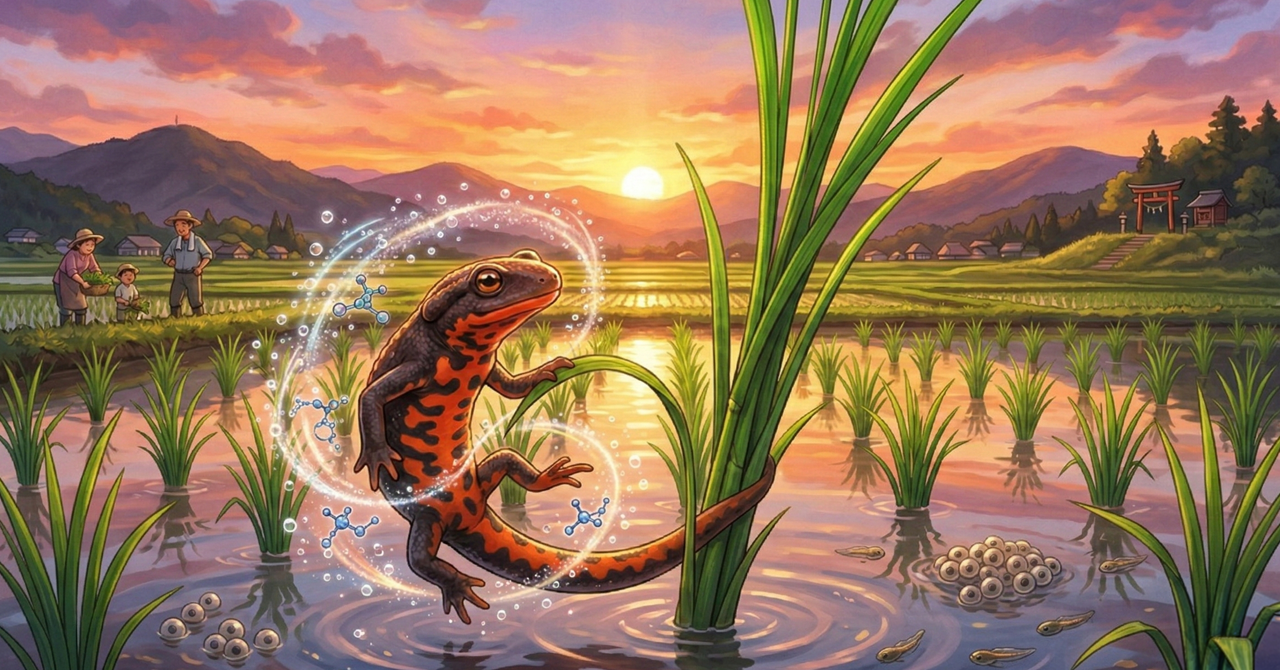
Recently, we've been hearing the term "Nature Positive" more often in the news. It's an initiative to "put nature on a path to recovery," but because it sounds like such a massive undertaking, some people might feel it has nothing to do with them.
But the truth is, hidden within the nature right around us is an "incredible power" that could potentially save the future of humanity.
Take, for example, the Japanese tree frog you might see on a rainy day. Did you know that research is currently underway because a compound they possess might become a silver bullet for certain diseases?
And today, I want to introduce you to another familiar creature that possesses even more astonishing abilities.
Surpassing iPS Cells!? The "Reprogramming" Ability of the Japanese Fire Belly Newt
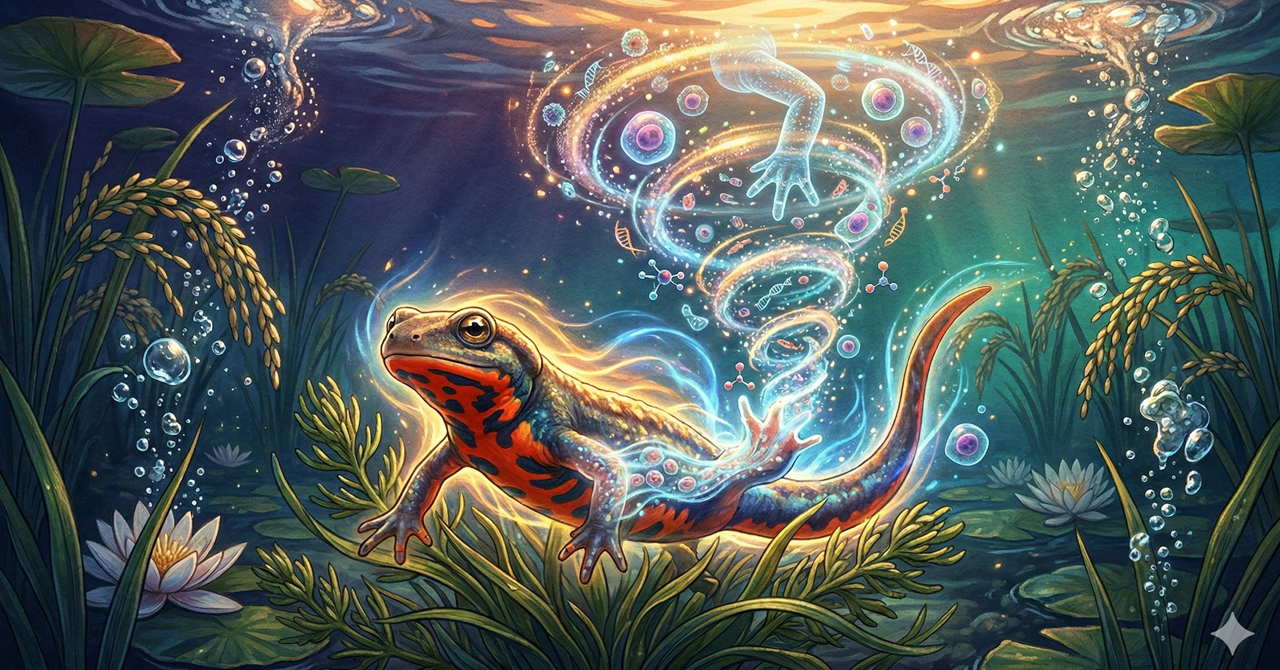
Have you ever heard of the Japanese fire belly newt? It's that newt with the bright red belly.
Surprisingly, this newt has the unbelievable ability to regenerate almost any part of its body over and over again—not just its limbs and tail, but even the lenses of its eyes and parts of its heart.
When we think of regenerative medicine, "iPS cells" are famous. Simply put, iPS cell technology involves taking a cell that doesn't yet have a specific role (it has no "blueprint") and giving it a new blueprint to transform it.
However, what the Japanese fire belly newt does is a bit different. It performs "reprogramming" (initialization), where it takes cells that already have a set role, resets them, and rebuilds them into completely different cells.
Researchers around the world are eagerly investigating the underlying "cause" of this magical regenerative mechanism. If this is unlocked, it could bring about a massive revolution in human medicine.
Why the "Guardian Deity of the Rice Paddies" is Disappearing
Despite being such a super-creature, the Japanese fire belly newt is actually currently designated as an endangered species.
In Japanese, the kanji for newt literally means "well protector." For centuries, they have coexisted with humans as "guardian deities" that eat pests in wells and rice paddies.
So, why have they been disappearing?
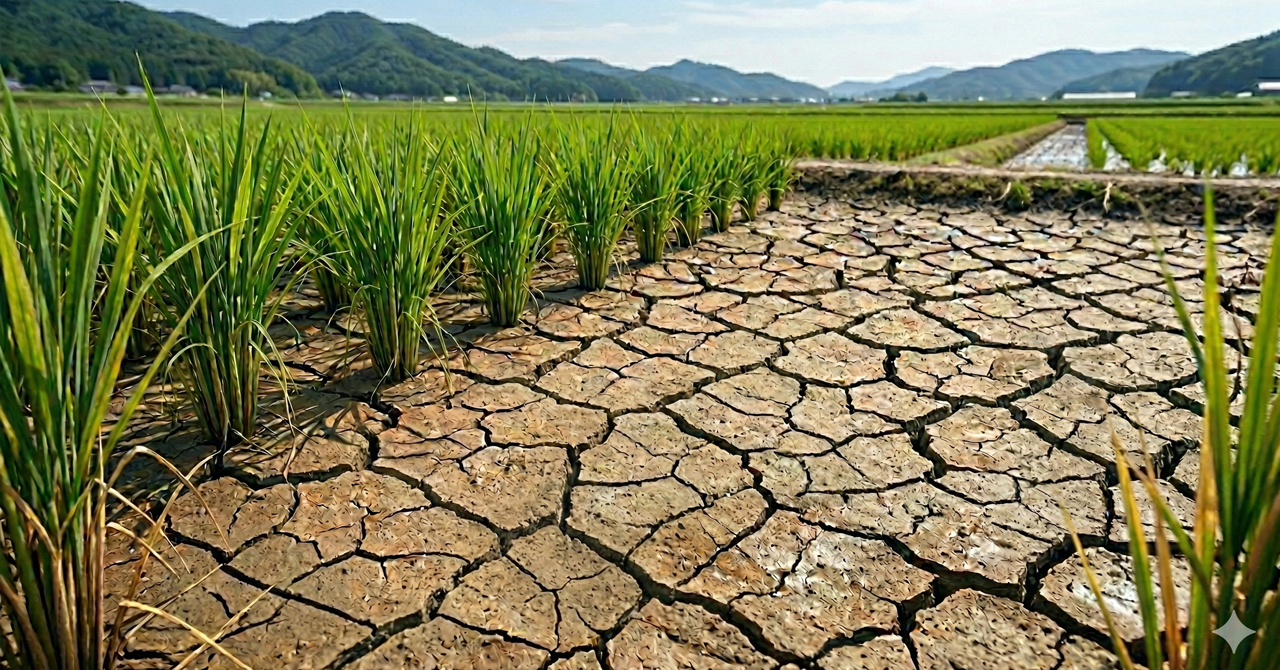
One of the main reasons is a change in the timing of when water is drained from rice paddies. In the past, rice paddies were kept flooded with water right up until the autumn harvest. Nowadays, however, a practice called "nakaboshi" (mid-season drainage) is carried out, where the paddies are drained and dried during the rice's growth period.
Why do they drain the water?
It's because when a rice paddy remains continuously flooded, large amounts of methane—a greenhouse gas—are generated in the soil. To combat global warming and suppress methane emissions, efforts are being made to extend the periods when the paddies are drained.
The problem is that this drainage period coincides exactly with the time when newts lay their eggs and their young grow in the water like tadpoles. Without water, these new lives cannot survive.
We are faced with a very troubling dilemma: actions taken to protect the environment are driving another species to the brink.
Nanobubbles to the Rescue:
A Nature Positive Solution
Do we prioritize "combating global warming" or "protecting the ecosystem"?
A new technology is currently shining a light on this difficult problem: "nanobubbles."
What if we could infuse the paddy water with oxygen-rich nanobubbles to improve the soil environment and suppress methane generation?
If methane emissions stop, there would be no need to artificially drain the paddies. If we can grow rice while keeping the paddies flooded, the newts can safely lay their eggs and thrive.
This is precisely what a "Nature Positive" approach looks like.
Aerating the water of vast rice paddies using nanobubbles might sound like a highly unrealistic idea. However, with our "Nano-Inset," this becomes a real possibility. The Nano-Inset is low-cost and has almost no limits when it comes to scaling up. For example, by installing it in irrigation canals or reservoirs, we could aerate all the surrounding rice paddies at once.
Protecting Nature Means Protecting Our Future
We aren't just protecting nature because "we feel sorry for it."
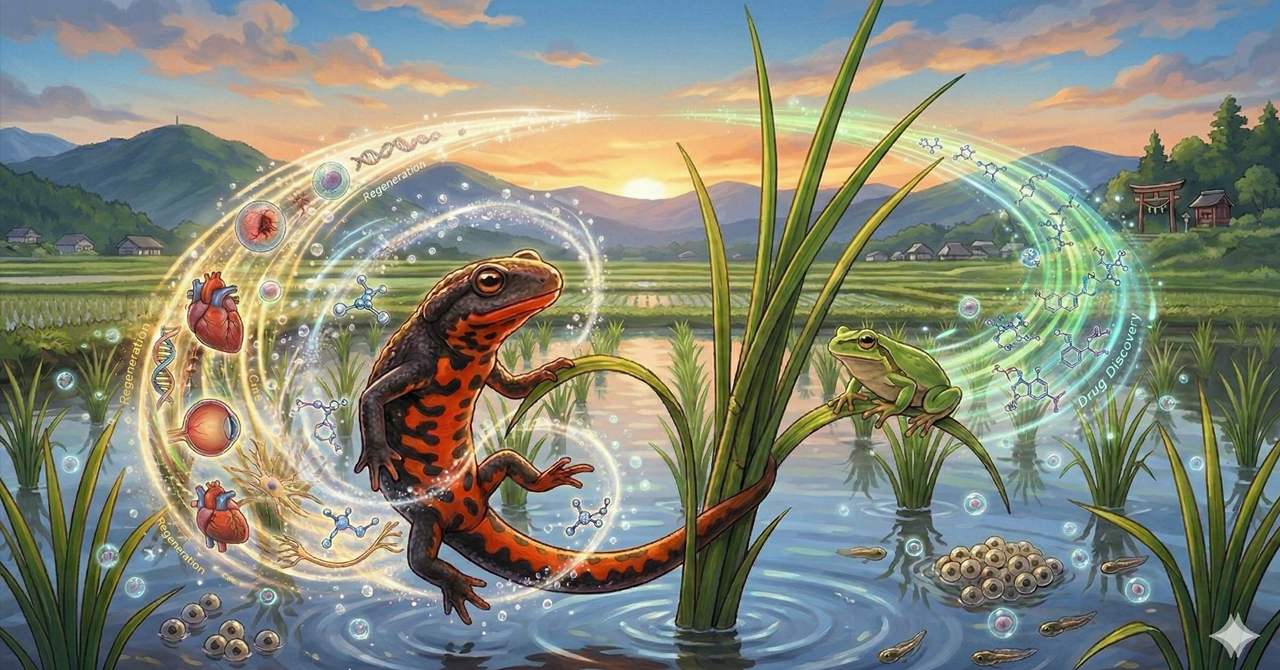
The unknown powers held by the Japanese tree frog and the Japanese fire belly newt have the potential to cure human diseases and greatly advance the future of medicine. If we destroy nature, we permanently lose the chance to benefit from these gifts.
Seeking ways to coexist with nature using the latest technology is for the sake of the Earth, and most importantly, for our own sake.
So that the newts, the guardian deities of the rice paddies, can continue to live alongside us forever. Why don't we build that "Nature Positive" world together?
Call for Business Partners
CWM is currently looking for business partners to bring about significant social change together using this "Nano-Inset" technology. If you are interested in creating new value through contribution to the global environment and carbon credits, rather than just hardware sales, please feel free to contact us.
